Friday September 25th 2020
The forecast is for F3 to 4 from NE which should make for an easy sail down the east coast of Fuerteventura. Tonight and for following 3 days very strong winds are expected so I am keen to get into Gran Tarajal harbour by late afternoon. I leave the pontoon at 0900 and stop at the fuel dock to top up and fill the spare can. At the equivalent of 80p a litre its much cheaper than mainland Europe (apart from Gibraltar !) For the first hour there is no wind to speak of so motor across to Lobos Island. I closely monitor the stern gland temperature since I repacked it. Last week it was getting too hot but it may just need time to bed in. It seems to be ok after an hour although rather drippy so will need further adjustment. Wind starts to fill as forecast and I manage a steady 5kts down past the huge Corralejo beach and sand dunes. I see three small whales 200m away, all in a row with their tales vertical, then they dive, assume it must be a fishing technique, or practicing synchronised swimming. For most of the day the only other boats I see are occasional local fishermen, a single man in a small open boat and using a long line. At least it is sustainable. All day there are repeated Urgency broadcasts from the coastguard warning of two small boats loaded with refugees from the African coast (just 60 miles away), that have been sighted south of where I am. We are told to not intercept but notify authorities if we see them. Fortunately I don’t see them, as not sure what I would do. Sea state is very good so I have chance to regain my sea legs while hopping about the foredeck with the pole. Just a few miles north of Gran Tarajal as we round a headland the wind blows up to 28kts in a matter of minutes. These ‘acceleration zones’ are common in the Islands and shown in the Pilot Book so I was prepared and had gybed in advance and furled the genoa. Arrived at the harbour entrance at 17.30. Got no response on VHF so headed for a pontoon and by the time I got there a man had arrived to take my lines.
Sunday 27th
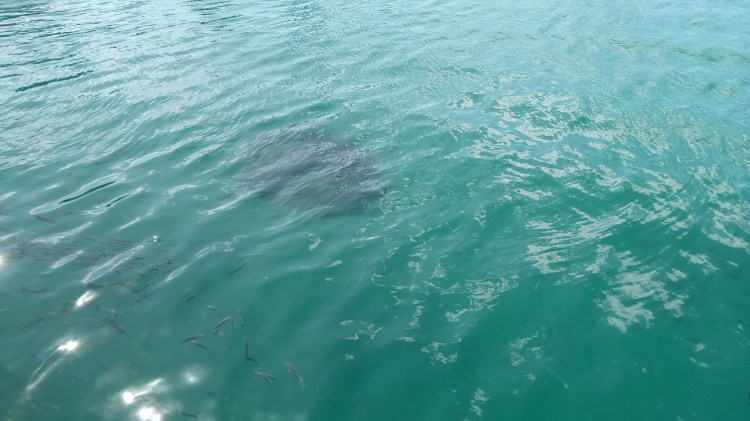
So here at Gran Tarajal on the south east coast of Fuerteventura I am presently sheltering from 40kt winds which started yesterday and are due to last till end of tomorrow. It’s well known in the kite surfing world for consistently strong winds and they have been out in force today off Satavento beach where the wind was offshore so the water flat. It’s a huge expanse of sand…. so that was for wimps really, if you want to call yourself a real kite surfer you went over to the north west coast where 4m surf was piling in, and rocks everywhere. Just watching is exhausting ! I came across a group of people gathered on the quay side and peering into the harbour, they were watching a sting ray, must have been 5ft across just under the surface and chasing a shoal of fish. I was a bit slow getting the phone camera going but just caught it swimming away. There are two pontoons here for visitors and not many spaces left. Some of the occupants look like they’ve been here a long while and are in no hurry to move on. Its cheap and cheerful, cold showers, no frills, no WiFi, no security, no questions asked. Shut your hatches at dusk as there are rats about. I have been put on the end ‘T’ of one of them, as the man who took my lines probably thought it the safest bet for a singlehander. It will make it easier to leave, and does mean I get no passing footfall, not even the rats can be bothered to walk this far. Its not the quietest spot though. For two evenings now a bloke on another boat (German I reckon or maybe Dutch or Scandinavian, all the same anyway), starts singing at top of his voice, opera type stuff, goes on for a couple of hours. I mean it would be worse if he was a rapper of course. And around midnight some of the locals like to joy ride around the car park for our entertainment. Thanks Graham for the tip off regarding the splendid bakery, I’ll look for it tomorrow on the way to the gym, haha.

Monday 28th
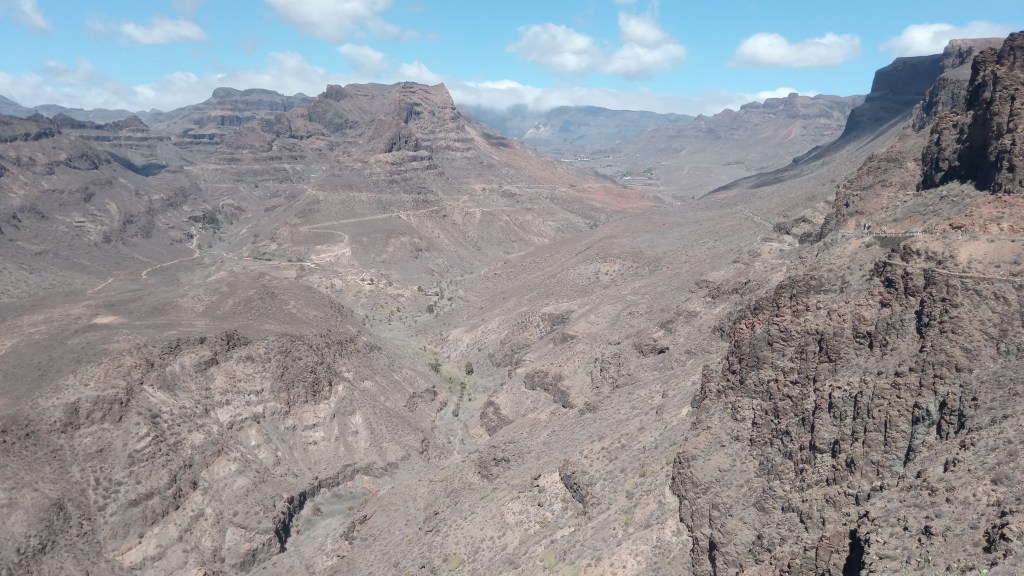
After driving to Morro Jable, on the southern tip of Fuerteventura, I have decided not to go there with Sea Orchid, as the stepping off point to Gran Canaria. There are just a couple of pontoons where visitors must go and they were almost full. I would have to moor bow or stern to and pick up a lazy line, always a tricky operation with crew, and singlehanded has little chance of execution without serious embarrassment at best. So this morning I am setting off directly to Las Palmas, the main port on Gran Canaria. It is 78 miles, so more than I can do in daylight, but the weather looks perfect for a crossing. I do not as a rule ever plan to arrive in a new place in darkness but make an exception this time as there is an anchorage inside the protected harbour and the place will all be well lit. Leave the pontoon at 10.00, no hurry as there is little wind to start with. Progress is slow with just 8 kts on broad reach and sails slopping. On the south east corner there is a wind acceleration zone, so when it builds to 14kts I put in both reefs, which seems over cautious. However within 10 minutes the wind is up to 18 and gusting over 20 and as I harden up onto a beam reach round the lighthouse at Morro Jable, I am very glad to have both reefs. For 9 miles along the south coast the wind is gusty as it comes down off the mountains and then once clear of the south west tip it settles down to a steady 14kts on the beam. The only hazards to contend with are the two ferries that run from Morro Jable to Las Palmas, which unsurprisingly are using the exact same course as me ! Through the evening just a few dark and sleek sea birds circle, sweeping low to within inches of the waves and turning into the wind to rise again without once flapping a wing. As the sun sets at 19.45, over where Gran Canaria lies but I cannot yet see, I have over 30 miles still to go. A full moon maintains a good level of light so I can still see the horizon, which is good but means no chance of a starry night show. My speed has picked up to 6 kts much of the time and the sea state is slight with a long swell on the beam. At 20 miles I pick up the lights of Las Palmas and right down the eastern coast, stretching up the mountain side like a jewel necklace. At 0200 I am 3 miles out and the wind dies as I get into the shadow of the island. It is a mass of lights all around, onshore and also on many battleships and aircraft carries anchored in the bay. But I can just pick out the green flashing light on a buoy at the southern end of the outer breakwater. It’s another mile to the anchorage once inside, not too many boats occupy it thankfully and I quickly find a space in amongst the pack. I break the silence of a still night and probably woke all the neighbours at 3am as the anchor chain rattles over the bow roller. Job done time for bed.
Friday 2nd October
Las Palmas is where Columbus stopped off in 1492 for a beach vacation, before heading off on the Santa Maria to discover the new world. In fact he did three more crossings to various parts of the Caribbean and the Americas. The house in which he stayed is now a museum, with a notable collection of maps of the world as they new it at the time. Columbus was convinced that land must lie somewhere to the west due to pieces of timber and even the occasional corpse that washed up on the shores of the Azores, neither of which were native to the islands. Birds were also encountered coming from that direction. Another point of interest I discovered is that Portugal and Spain signed the treaty of Tordesillas in 1494 which divided the Atlantic and its islands between them, both those already discovered and those yet to be. Apart from the Canaries which were already in Spanish hands, and the north east corner of Brazil which was already Portuguese, everything west of 370 leagues (1300 miles) from Africa, would belong to Spain and to east would be Portuguese. Of course the English didn’t show much regard for that in later years ! They still don’t know how the original indigenous people got to the Canaries from North Africa but they must have had boats that could sail downwind on the trades.
Here endeth today’s history lesson.

Monday 5th
Today started with having to move the boat to another berth. The previous day I had noticed that the bow line, (the one on a lazy line which is attached to some permanent anchor point on the sea bed) had gone slack and my bow was almost resting on the next boat. So I hauled more in but it never seemed to get taught. Next morning my bow was again leaning on the next boat, and when I pulled more of the line up i discovered it was no longer attached to anything ! Later, I was able to dispose of the 5lt can of old oil which has been hanging about since doing the oil change a month ago. The marina has an oil recycling point which is a first as far as I’m concerned. Then a new bottle of gas from the shop at the end of the quay, just €16 compared to £25 usually in UK. Then I took the plunge to strip down the outboard carburettor, as lately it would only run on full choke all the time. As ever, there was an article on one of the cruiser information exchanges, which was doing exactly that with my model of engine. Not quite as easy to do in practice as the article suggested but nevertheless after 2 hours it was all back together again and now runs as sweet as ever. This is the same engine that got dropped in the sea while in Ireland a few years ago !
Tuesday 6th
My plan was to cross over to Tenerife today, taking a route around the top of Gran Canaria then straight across to a bay very close to the top end of Tenerife, where by all accounts there is a good anchorage. However reading on Noonsite, which publishes up to date information about ports, marinas and anchorages, it seems the authorities do not want people anchoring anywhere around their coast, and one is likely to be moved on to berth in a port / marina. Not sure if this is to do with Covid or migrants coming over from Africa, or they just want to boost their economy ! So I decided to instead go to Puerto Mogan on the south coast. From here I can make a crossing to the southern end of Tenerife or even go directly to La Gomera. Journey to Mogan is 45nm and the forecast is for light winds, which have moved round to the NE but will bend around the island and will also be higher in the acceleration zone off the south east corner. I leave the pontoon at 0900 and head out through the mass of anchored ships just outside the harbour. There are two cruise liners, presumably laid up for now. It’s a lumpy confused sea but enough pressure in the sails to not slop and keep the boat moving on a broad reach. As I move round the coast the wind direction follows until I am goose winged on a dead run. The wind increase to 22kn near the south east corner so I put in a couple of reefs. Then it dies for a while and then it comes round from the west, on the nose for the final leg along the south coast. Then it rains, in the place that boasts more sunshine hours per year than anywhere else in Europe !! I drop anchor just outside the marina, amongst three other boats, one seems to have a big barking dog on board, and another is playing load music. So much for a quiet night.

Thursday 8th
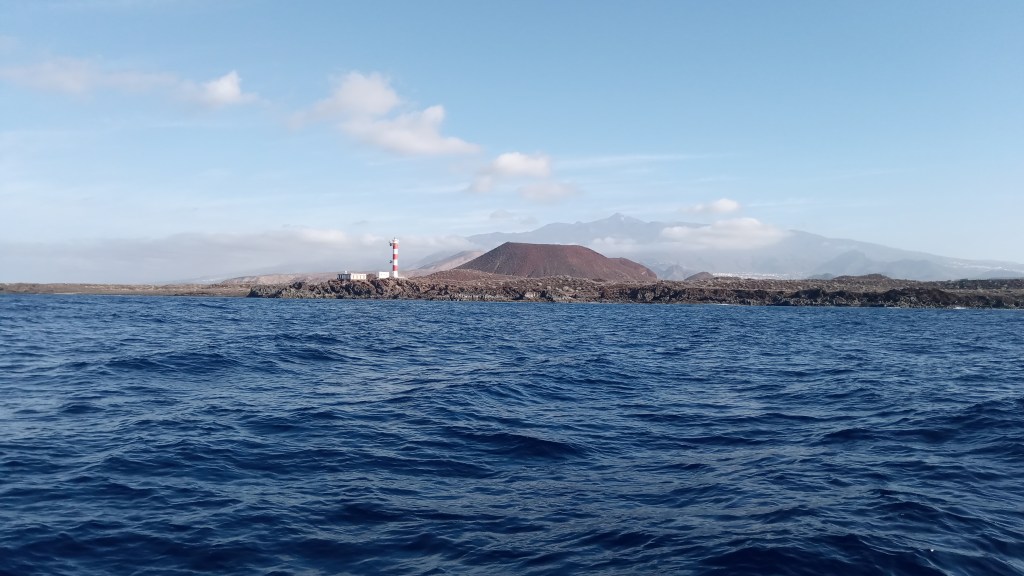
The anchorage outside Puerto Mogan harbour is very sheltered but a bit roly poly, like most anchorages in this part of the world. I rowed inside for a look around but got no further than the first pontoon where a marina official was waiting to intercept my arrival. He insisted that I needed to present ships papers at their office, as I was entering a port (in my dinghy for heavens sake !) . So I had to row all the way back to the boat out on the anchorage and then in again armed with ships papers. I could have paddled over to the beach instead and avoided the red tape, but too late, I was a marked man by then. It is backed by towering cliffs with a number of caves at sea level so it was an opportunity to get the kayak out. At high water I was able to paddle over 50m inside one of them, before it got very dark. I passed the man and his dog going ashore, for walkies I imagine, the dog is an enormous blood hound sort of thing. Good job it’s owner has a catamaran, the dog has its own hull for accommodation ! Today I left the anchorage at 0900 heading for Tenerife. It’s going to be a hot sunny one and for the first hour there is no wind as we are still in the wind shadow of the Gran Canaria mountains. But bang on cue, just as the wind maps said, as soon as we cleared that shadow, about 8 miles out, the wind accelerated to 14kts and then 20kts, just abaft the beam. The sea kicked up too, steep waves with a period that just seemed to synchronise with Sea Orchid’s rolling cycle. Crazy rollin, no g. When I went to raise the mainsail I discovered that the halyard had looped around the radar reflector, something that happened last year just before the big storm, those on the ARC will recall. It’s impossible to retrieve without going up the mast. But using the spinnaker halyard I was able to get the main up as far as the first reef. So it was a fast and lively 45nm to Las Galletas on the south eastern tip of Tenerife. It’s not a great place to stop but there is simply no where else on route to La Gomera. I don’t recommend coming here, it’s very cramped, literally wedged in between the pontoon finger and the boat next door. The showers are closed and the WiFi out of action. I’ll be leaving at first light.
Monday 12th
Never be without a lemon on your boat. From the manual “25 uses for a lemon” number 17, I successfully launched a lemon, with mousing line in tow, through the spreaders (on the second attempt no less !) and was thus able to retrieve the main halyard from its wrap round the radar reflector. The lemon, whilst a little bruised after it’s excursion, is still good for a GnT, cheers. Catching up on a few days ago now, I did sail for La Gomera on Friday. Forecast was for no wind to begin with as I would be firmly in the wind shadow thrown up by the mighty mount Teide . Quite how extensive this shadow would be I would soon discover. From Las Galletas to San Sebastian is 45nm and for the first 40 of these I had no more than 9 kts, from pretty much all points of the compass. I was just preparing for a soft landing in the harbour when, just as the pilot book had warned, I was hit in a matter of seconds with 20 and then 24 kts on the beam, along with a steep sea. It didn’t let up until I was inside the breakwater. One has to first radio Port Control for permission to enter, as there are ferries in and out. Well that happened a tad late, but no matter as I had seen two ferries leave only in the past hour, and there were non on the horizon. I couldn’t make out a word the nice port control man said anyway. Then on arrival at the marina I radioed them and again couldn’t understand the reply so I just moored up to the fuel pontoon and waited for someone to turn up. It took a while but eventually I was shown to a berth and the marinero couldn’t do more to help. Bearing in mind that he was the only one left in charge as it was after 2pm and the office was now closed till tomorrow, and he had to deal with a Englishman who could only communicate by waving his arms and speaking English with a Spanish accent. Really must try harder next time.

Thursday 15th
On Tuesday I departed La Gomera bound for the smallest and furthest west of all the islands, El Hierro. In fact it is so far west that prior to the discovery of the new world it was considered to be on the edge of the known world, the last bit of dry land. The forecast was for light winds from NE and i would again be in a wind shadow for some distance, this time from La Gomera’s lofty peak at over 1800m. However in the harbour it was blowing a F4 from south. I was parked next to a sport fishing boat which was about to leave at the same time as myself. The owner / skipper by the way is a Geordie who in middle age decided that the idea of selling up and moving to La Gomera to go fishing, was infinitely more appealing than carrying on as a construction worker in Tyneside. So now he takes paying guests on day trips to catch big game fish. Anyway he was not happy as a southerly wind keeps the fish away apparently, (how do fish know which way the wind is blowing ? answers on a postcard please). Actually I think he was just setting suitably low expectations for his clients. As it turned out the wind moved around to E after a few miles and then N, so once again a beam reach for most of the 45nm crossing. Half way across I noticed another boat following in my tracks. On AIS she was showing up as the Annabel J . I had noticed her in San Sebastian, a beautiful old gaffer, in fact not that old as she is a replica of a Bristol Pilot Cutter, and built in mid 90s. I managed to hold her off and get to Puerto Estaca just 10 minutes ahead. This time the final approach was gentle despite Windy clearly showing another acceleration zone on the north east corner of the island. The harbour has been endowed with a new 100 berth marina in recent years, and it looks to have been barely used, there are only six other boats ! The Port Policeman handles everything, he was waiting on the pontoon to take my lines and then invited me to his office to complete formalities, followed by some helpful advice about the bus into town, which incidentally sits 600m above the port, so the bike will not be getting an outing.

Sunday 18th
El Hierro was well worth a visit. It is another big volcanic rock but at only 2 million years old it is a relative juvenile compared to Lanzarote at 20million years. As such it has not eroded so much and combined with more rainfall than the other islands, it’s landscape is not dissimilar to Scottish lowlands, once you get above 1000m or so. It was refreshing to see fields of grass and pine forests. There was an eruption just a mile off the southern tip in 2011, when solidifying molten rock appeared on the sea surface, the water turned green and gases erupted. Another factoid I must share is that on the southwestern tip, very close to Orchilla lighthouse, is Longitude meridian zero, and was for a very long time, until Britain declared Greenwich as longitude zero. I have some sympathy with the Spanish, who are still smarting from being robbed of this honour, it seems an appropriate place on literally the end (or beginning) of what was the known world, rather than a hill in southeast London ! A good quiz question for you Ian.

I departed Puerto de la Estaca this morning, bound for Puerto Tazacorte on La Palma. The wind has gone round to the south which does not happen often in the Canaries where the trades from the north prevail. And since this leg is due north it seemed like a good time to go. I left the pontoon at 0800 just as the sun was rising, it’s a distance of 52nm so just doable in daylight. Outside the harbour it was blowing a nice 12kts and we soon had the boat settled goosewinged and riding a predictable see from behind. About half way across I could see not only El Hierro behind me and La Palma in front, but also to my right, La Gomera, and rising above it, Teide on Tenerife. The wind stayed steady all day but the sea became increasingly lumpy and confused making for an uncomfortable ride. This seems to be the norm in these parts. Despite two emails and phone calls to the marina here I have not been able to get a response to a booking request so was a bit anxious on arrival. No one could be raised on the VHF but as I turned inside there was a marinero waiting on the reception pontoon. So here I will stay tonight and hopefully get a space tomorrow although it does appear jam packed.
Monday 26th
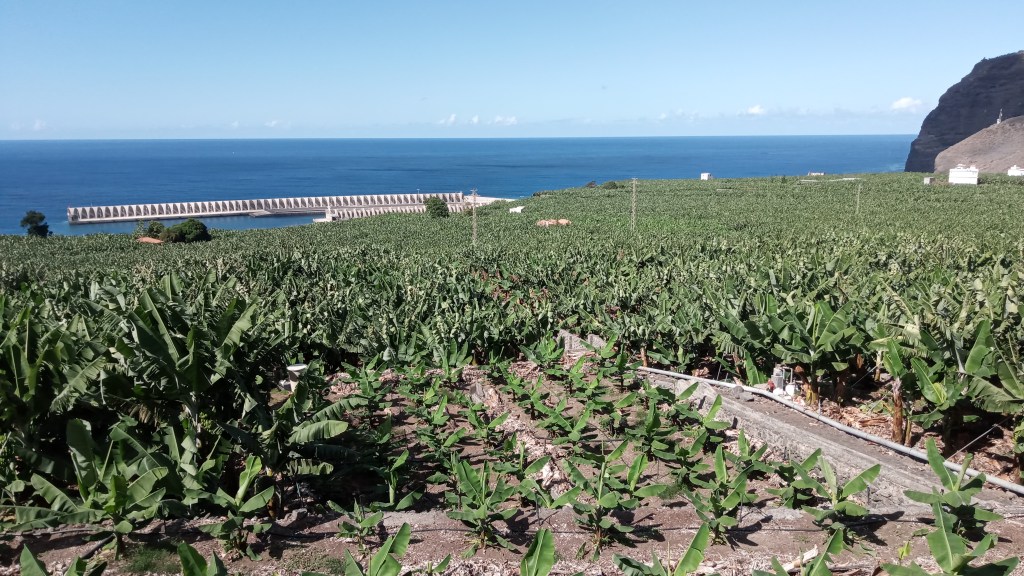
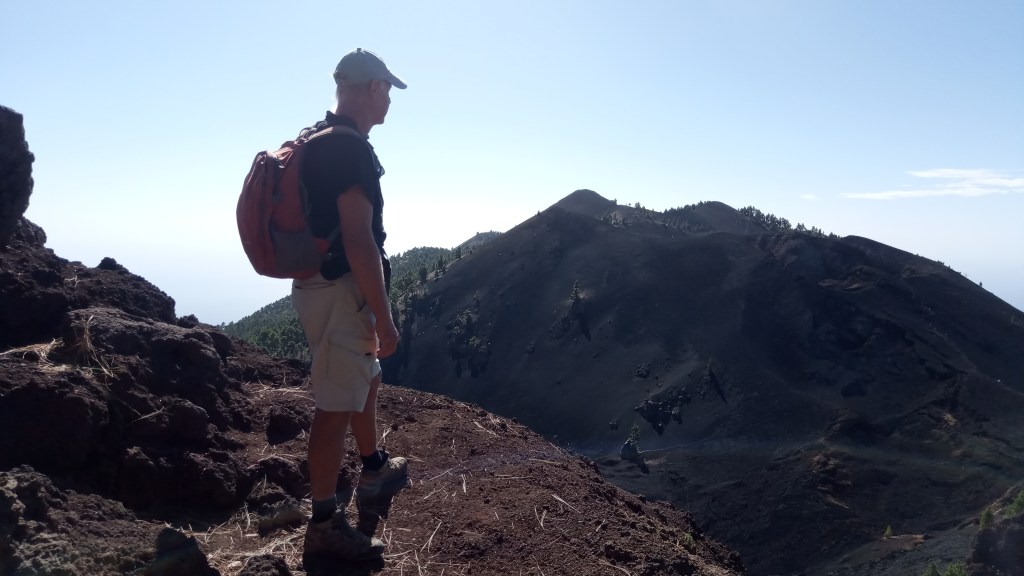
I am apparently very lucky to have been given a berth as I’m told others have not, and have had to stay out on the anchorage till something becomes vacant. That would not have been an option for me as for two days from when I arrived, the wind continued to come from west and become gale force, directly onshore with no protection from the harbour wall. We also had torrential downpours which are very unusual on the west side of the island. The mountains and ravines are incredibly steep so the water just runs straight off and within a very short time the dry river beds become raging torrents. It’s then that one understands how this apparently hard volcanic rock has been so deeply eroded. I have decided to stay a month here. People said Tazacorte is a place where people visit and often never leave. At first I couldn’t see the attraction. The marina itself is surrounded by banana plantations, is separated from the capital, Santa Cruz de la Palma, by a massive mountain range, and the nearest shops are a mile away and a good couple of hundred meters up hill. But the marina has a very friendly feel and is well run with all the facilities that make life easy. It’s quiet (no ferries, at least not yet), very secure (even with a F8 piling into the sea wall there was absolutely no swell finding its way to where I’m berthed), and there are many semi liveaboards, who come back here time and again. There is a bus every hour up the hill to town and indeed beyond to Los Llanos which used to be the capital in olden times. And the clincher was that there is a newly opened Lidl there !! What more could you want. A beach perhaps? well it’s got one of those too, so long as you don’t mind taking your kit off as it’s a designated nudist beach. I won’t be posting much again until I leave as I don’t plan on sailing, there isn’t really anywhere to go for the day from here. The big activity is hiking the many trails in the mountains. I’ve already tackled a couple and have been invited to join an unofficial band of walkers from other boats, so it’s time to conquer the vertigo !


Thursday 19th November
The day has arrived to start making my way back East. I will leave Sea Orchid in Las Palmas until I return in the new year. However getting back there is not as easy as coming from there, given the prevailing north easterlies, and in fact from tomorrow the winds are going east to south east which makes it even more difficult. Delaying a week is no better though as then very strong north westerlies arrive for another week. So I have multiple passage plans with options, and will have to be flexible and play it by ear. The most ambitious idea is to do it in one long hop, 190 nm going north of Gomera, south of Tenerife and north of Gran Canaria. I slip out of Tazacorte in virtually no wind and head toward the southern tip of La Palma. The coastline along this stretch is one of banana plantation terraces on impossibly steep mountain slopes. The ridge which I walked the other day in clear skies, today is shrouded in cloud. Crossing to La Gomera the wind is due east and it is soon apparent that I can’t hold a course high enough to pass north, so plan A.1 kicks in and I go to the south. Late afternoon and the wind veers south east so bang on the nose. There seems little point in motoring into a headwind for half the night so I decide to put into Puerto de Vueltas at the mouth of Valle de Gran Rey. I am surprised to find 10 boats already at anchor but there is plenty of room and the holding is said to be very good, just off the stony beach and a short distance from the harbour.
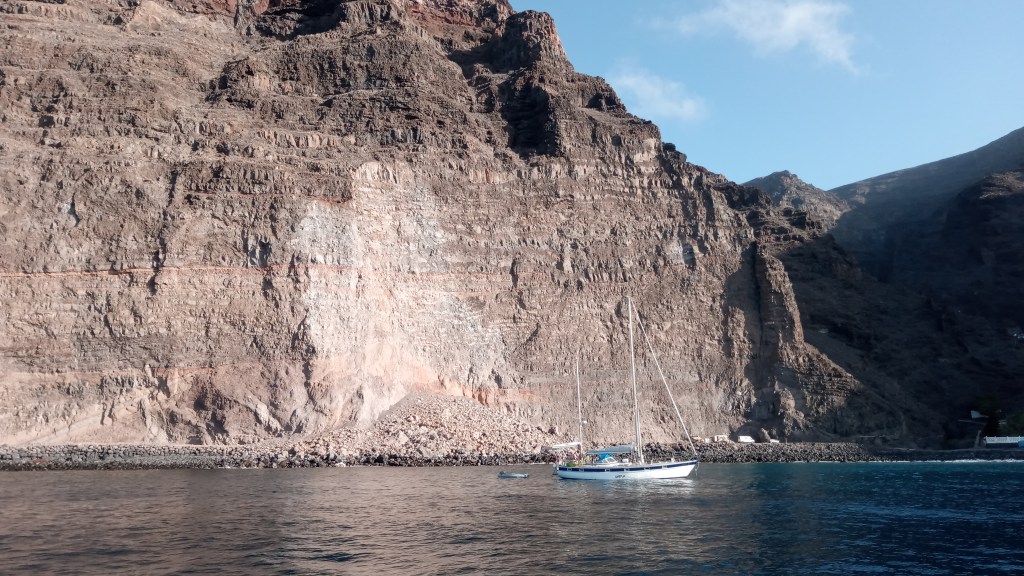
Having anchored in the dark it is always interesting to see the next day, in light, where one has actually ended up in relation to the land and other boats. Fortunately I seem to be nicely distanced from other boats and about 100m off the beach, which it turns out later is a very good thing. The surprise is that immediately behind the beach is where just 2 days earlier there was a big rock fall, which I had happened to see on a YouTube clip (see the pictures page). It just missed a bunch of camper vans but amazingly they are still parked in the same place !! I stayed 2 days on the anchorage, the first very pleasant, but the second was definitely not. The forecast was for F4/5 SE, so I had decided it was still not worth trying to move on into a headwind again. But it soon became apparent that although the direction was from behind the cliffs at the end of the bay, the wind was going to bend around the end and over the top. By 10am we were getting gusts of 30kts and by noon I recorded gusts peaking at 46kts !!! One boat was dragging across the bay and another bailed out. I spent the day in the cockpit ready to start the engine at a moments notice. In the end the anchor held firm and I can only say it was the best holding I’ve ever had.
Sunday 22nd
The forecast is similar to yesterday so I am definitely leaving ! I make my escape at first light and enjoy a very pleasant beat around the south west coast of Gomera. Then I try to head for the southern tip of Tenerife, however it is initially directly into the wind, so first I decide to head south east, to be clear of the effects of the island land masses which have a very dominant influence. But I am steadily headed so tack and head north east, directly toward the towering landmass of Mount Teide. I need a change in wind direction to make any decent progress so hope that Teide might provide just such a disruptive effect. And indeed so it did, as I got closer to Tenerife, the wind veered more and more to the south so that I was lifted and almost able to lay a course for the southern tip. In the end, with leeway, I came to the town of Los Cristianos, just a few miles from Punta Salema. I tacked and sailed along close offshore and then noticed some boats anchored in a small bay, which I had previously discounted as normally exposed. But today, and more importantly tonight, it is very sheltered so I made a tactical decision to stop for the night and continue tomorrow.
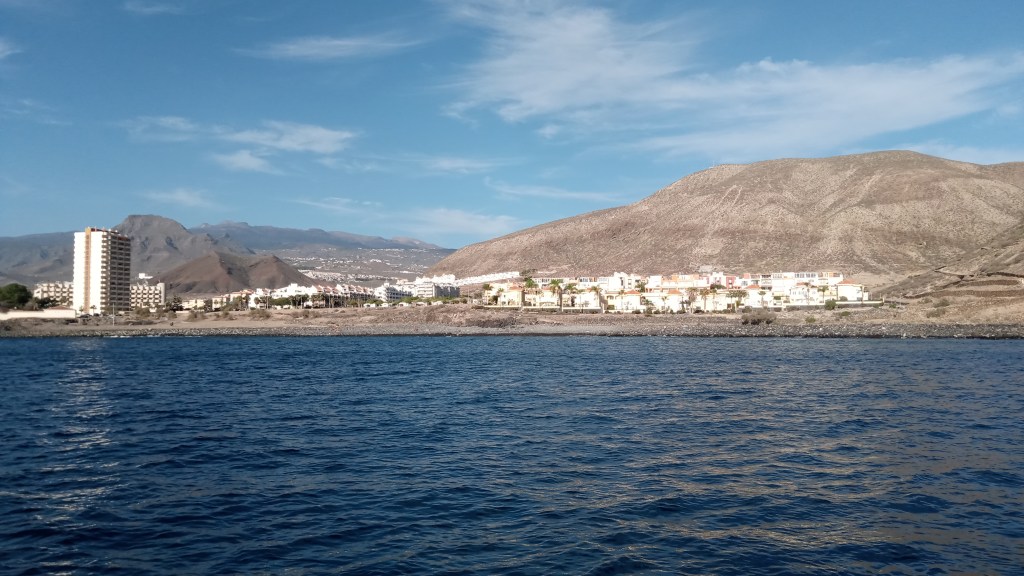
Monday 23rd
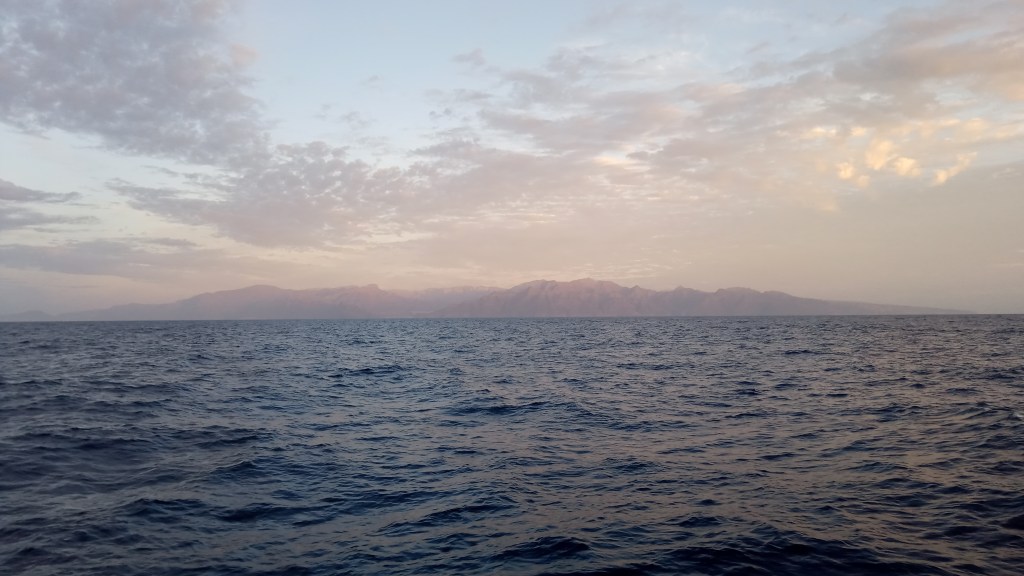
The anchorage proved to be excellent, with little swell and is a very handy stopping place if on passage between Gran Canaria and the western islands. I weighed anchor at first light and had a nice 10kt offshore breeze immediately, so tore along the 4 miles to the headland. The forecast is the same as yesterday but this time my plan C.1, aiming for the anchorage at Mogan, is sadly SE so directly into the wind. It’s also an ambitious 54nm. The first tack takes me south but I am steadily headed so I tack and head NE. The wind increased to a steady F4/5 but with a lumpy sea, close hauled in these conditions is not Sea Orchid‘S finest point of sailing. I was barely making 4.5 kts over ground and with leeway I was heading for the northern end of Gran Canaria. As it turned out, over the course of the day the wind veered so I was lifted up to the mid western side, but still no where near Mogan. By late afternoon it was clear that I would either have to carry on through the night around the north side of GC or anchor in a bay. There are just 2 possible anchorages in this area, Puerto de las Nieves and Puerto de Aldea. The first is inside the harbour, very small and the holding said to be poor so I went for the second which is off a beach in an open bay. It would normally only be suitable as a day anchorage but tonight the wind is expected to die completely so it should be suitable, if a bit roly poly.
Tuesday 24th
The last leg of this year’s tour of the Canary Isles. It’s just 35nm to Las Palmas going clockwise from the anchorage. Forecast again is SE and this is the last day of easterlies which have been blowing now for a week. From tomorrow very strong nor’westerlies will arrive and last for another week at least, so it will be good to be in Las Palmas harbour. I leave the anchorage at 0630 as I am keen to catch the last of the SE wind once I get around to the northern coastline. It’s a very red and orange sunrise as there is a lot of high level cloud. Once clear of the high mountains the wind fills and I enjoy a close hauled tack in a F4 on flat water. Sea Orchid bowls along at 5 to 6 kts. I try a tack inshore but soon regret it as I move into wind shadow so tack out again and stay out all the way to La Isleta, the big rock just north of Las Palmas. Then it’s a tack south for the entrance to the harbour, but the approach means weaving through many big ships anchored outside. On arrival I am advised by the marina that there is a long waiting list of boats wanting to berth and I will have to wait in the anchorage, probably for 3 or 4 days. The anchorage is packed though so it’s a struggle finding a spot. There must be over 30 boats here. I think the reason it’s so busy is that many in the ARC fleet, which left here on Sunday, were unable to sail in the end because crew were unable to fly out, so they remain here. It doesn’t seem to have dampened spirits for some though, I have ended up next to the party boat, singing till late in the evening ! Signing off now, hopefully back again in early 2021, Covid restrictions permitting.
 The Adventures of Sea Orchid