Saturday 26th April
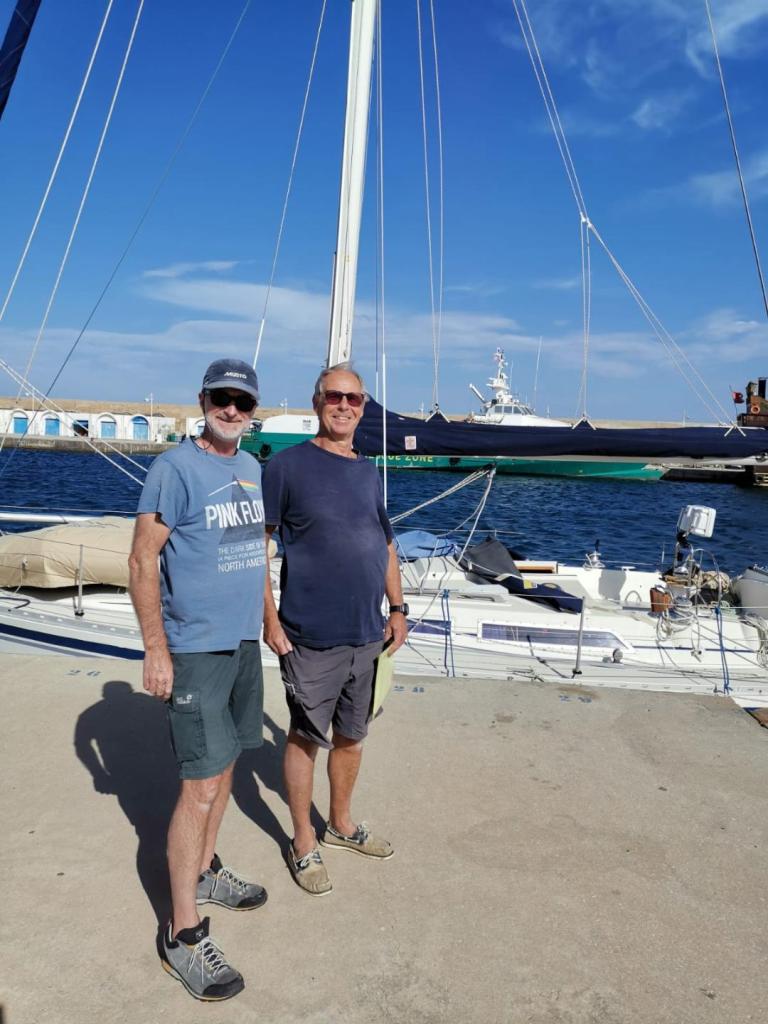
The day has arrived to leave Hammamet and Tunisia and start the long voyage home. The decision to leave today is only made after the 10am update to weather models, which indicates a short window of opportunity to sail up the cap Bon peninsular in favourable winds. After that it’s anybody’s guess, Sunday night might bring heavy rain while crossing over to Sardinia. There was a final dash round the supermarket, I now have enough food for two weeks, though the last few days of that might be a limited to tinned tomatoes and chickpeas. I have an extra 40lt of water in jerrycans, so in all enough for maybe three weeks. Four full gas bottles should last four months, and full to the brim with diesel. With any luck I should be able to stay under the Schengen radar until I reach Gibraltar. John and Christina help with leaving the pontoon and going round to the customs dock for check out formalities. They hope to get to the Caribbean next winter having spent this one rigorously preparing their X Boat 43. Customs clearance goes smoothly taking just an hour. One guy wants to see the new impellor, the new one that I brought out a few months and fitted in the water pump ! Fortunately the other guy sees sense. So it’s about 230nm to the southern tip of Sardinia. It may take two days, it may take three, it’s in the gift of Poseidon.
Tuesday 29thApril
Hello from sunny Sardinia, Malfatano bay to be precise, on the southern tip. I arrived yesterday evening after 52 hours on passage. It started and ended well but the middle bit not so good. I had left Hammamet at 1700 hrs in a brisk 20+ kts offshore breeze on the beam, so heavily reefed we sped up the coast. This moderated to a F4 at sundown and we came round onto a beat. By dawn we were 6nm off Kelibia and tacked for the end of the Cap Bon peninsular. I sailed close inshore to get a lift and was called twice by the navy asking if there was a problem. I assured them not, I think they were concerned I might be picking up migrants from the beach. As we rounded the headland the wind died and it didn’t return, to any useful extent, for another 24 hours ! Sunday was mostly occupied dodging ships passing through the gap between Tunisia and Sicily. It’s a very busy route with a vessel passing one way or the other about every 15 minutes. I had to cross them at an oblique angle (it’s not a TSS) but luckily, of the more than 20 vessels that I crossed, only the last one forced a significant change of course for me. By dark I was clear but still no wind and the forecast promised thundery showers through the night. As it turned out I didn’t catch any but there was plenty of lightening around. Monday morning the sky and sea were 50 shades of grey. It drizzled most of the day but no matter a F3/4/wind arrived at last and we had a steady broad reach for the final 60nm. A couple of dolphins passed by and a few gulls came over for a look, taking a break from their scavenging around nearby fishing boats. The Tunisian flag came down to be replaced by the Italian flag, but no Q flag as I don’t want to attract attention from a passing coastguard boat. I anchored in 5m on pure sand on the east side of the bay, just as the sun set, and ready for a good night’s sleep.
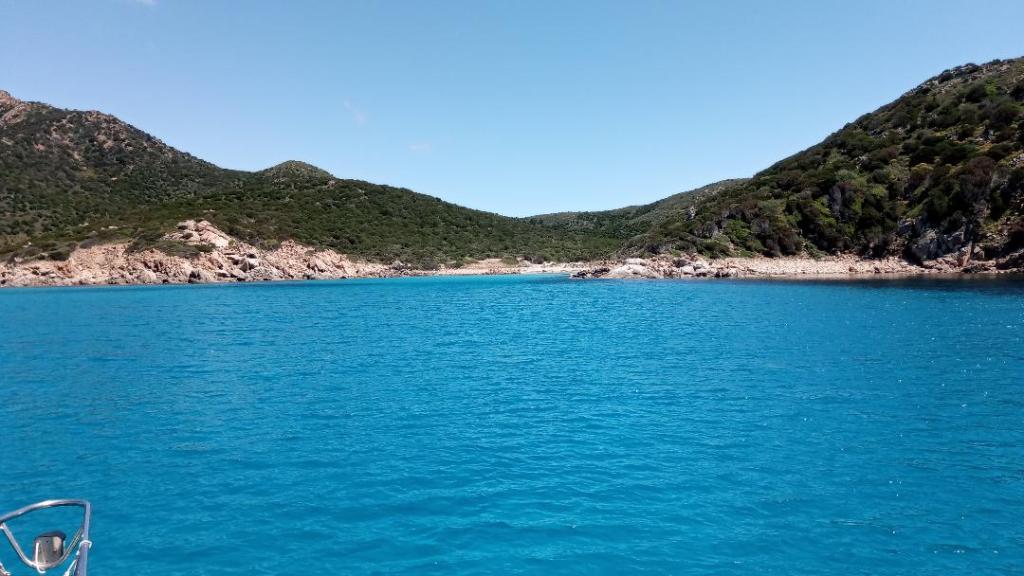
Malfatano Bay
Friday 2nd May
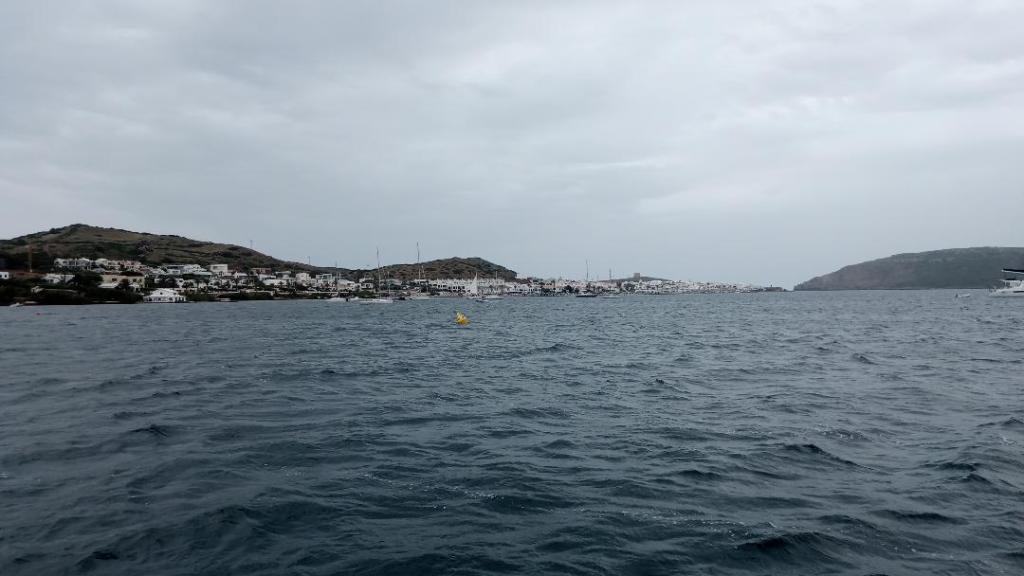
On Wednesday, capitalising on the current spell of easterlies, I made tracks for Menorca, a distance of about 230nm. On a clear sunny morning I weighed anchor just as a Guardia Financia patrol boat pulled into the bay. Talk about close shaves, he went over to one of the other boats first whilst I beat a hasty exit ! I was soon bowling along in 15 to 20kts from directly astern and making 5 to 6 kts speed under a poled out genoa. This configuration then remained in place for the entire passage, swapping it from one side to the other a number of times as the wind swung back and forth through 20 degrees. A two to three meter following sea soon developed, approaching from the quarter, conditions which challenge the autopilot as the boat corkscrews on the front and back of each wave. Having just a foresail and no main allows it to make larger deviations from the set heading (at times as much as 15 degrees either side) without upsetting the rig. And so another two days and nights followed, falling into the cycle of steer, eat, sleep, repeat. The first night was a clear sky allowing the cosmos to show off its finery of jewels to the maximum. Also we were treated to the first crescent of a waxing moon, which by amazing coincidence appeared directly ahead and provided an easy point of reference for my periods of hand steering. Otherwise, in order to hold a steady course, one is forced to be watching dials and numbers almost continuously, a practice which is impossible to maintain for very long. This stretch of sea is not greatly frequented with other vessels and the few I did pass seemed to be mostly on the same or reciprical course as my own, because I was travelling from the southern tip of one island to the northern tip of another. I narrowly missed a large turtle idling along and wondered how many are not missed by all the ships around. At dawn of the third day I was passing the lights of Mahon to port as I made my way the last 20nm to the splendid anchorage of Fornells, just around the north east corner of Menorca. I’ll stay here a couple of nights and take stock before moving on to Majorca.
Tuesday 6th May
On Saturday I took the opportunity to top up the water tanks and obtain fresh provisions (fruit and veg). Fornells has changed quite a bit since last here 3 years ago, now lots of pontoons and a new fuel dock, which I moored down the side of, as another boat was already on the fuel berth. The Ports IB chap came over straight away and was very helpful. For the sum of €6 I was able to fill up with water, and could have stayed a couple of hours. However just after I had set off on foot along the quay a Civil Guard truck rolled up, and I could see them go over to the other boat and check papers. So after visiting one veg shop I quickly returned, checking the coast was clear, before slipping lines and making a quick exit, another close shave ! After a fine sail along the north coast in F4 SW, I pulled into Cala Algayerens for the night and stayed the next day awaiting a good wind to cross to Majorca.
On Monday I had a fine sail around the western end of Menorca to Cala Son Saura. Dissapointingly though, there was much swell into the bay, making SO roll unbearably. The forecast looked good for a following wind that night, all the way to Illa de Cabrera off the SE corner of Majorca. It is a National Marine Park and has one of the best anchorages in the Balearics, although you actually have to pick up a mooring buoy. This has to be reserved in advance online, along with a sailing permit. So at 23.00 hrs I set off south west and soon picked up a fine breeze. However the forecast had omitted to say there would be a risk of thunderstorms. During the night I received a pasteing by three in all, the last one at dawn was one of the worst I have ever experienced. Driving hailstones in 25kts pounded us for 15 minutes, preceded by fork lightening all around, and followed by no less than a water spout which passed about half a mile away. I had put the iPad and phone inside a baking tin inside the oven (a sort of faraday cage so they say) as was sure I was going to receive a strike. As it turned out though no damage was done, just a lot of water down the companionway and waterproofs that proved to be hopeless against the onslaughts.
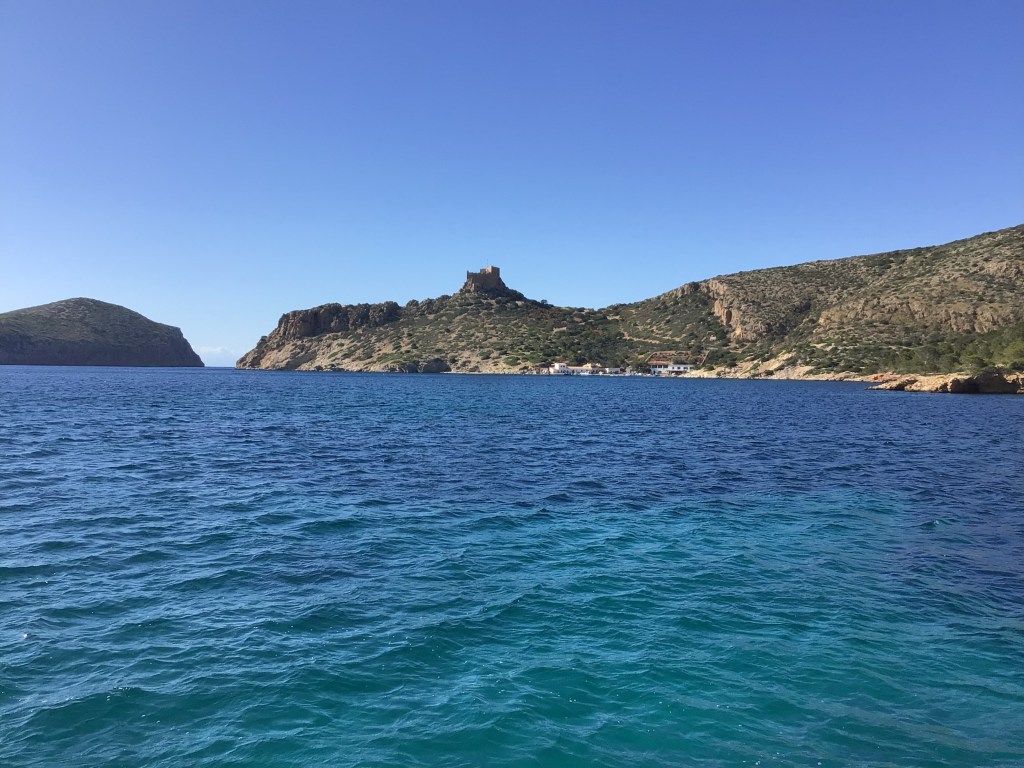
Illa de Cabrera lagoon, landing stage and castle above.
Saturday 10th May
Mid afternoon Wednesday I set off from Illa de Cabrera for the passage to Ibiza, 63nm distant. Forecast was for F3/4 E to SE all night so a dead run. In the park Rangers office they had a screen showing live footage from a web cam monitoring close up an Osprey nest with a couple of chicks and the mother. The nest is on a ledge on the cliffs at the entrance to the lagoon so as I departed I was scanning the cliffs intently but could not spot it, so well camouflaged against the rocks. The crossing was happily uneventful this time and I arrived mid the following morning at Cala Xarraca on the north coast of Ibiza. Close by me in the anchorage was the expedition vessel Tara. Its has an auspicious history (see https://fondationtaraocean.org/en/schooner/tara-schooner/) and notably was Sir Peter Blake’s boat, the one on which he was killed by pirates off Brazil.
Today I continued west along the north coast passing imposing cliffs which played havoc with the offshore wind. Arriving in San Antonio bay I made for the anchorage inside the harbour. When I was here in early 2022 there were just a handful of boats. I sat out bad weather for two weeks and dragged anchor on the sea grass. This time the harbour is full of boats and paraphernalia, dozens of moorings taking up most of the useable space, ie that without Posidonia. Officially there is nowhere to anchor but there are already about 20 boats anchored so I settled for a spot amongst them. It’s blowing a F5 off the beach where a live rock band is playing and I’m receiving the full benefit. When the wind has calmed down later I’ll get ashore to restock before embarking on the passage over to mainland Spain.
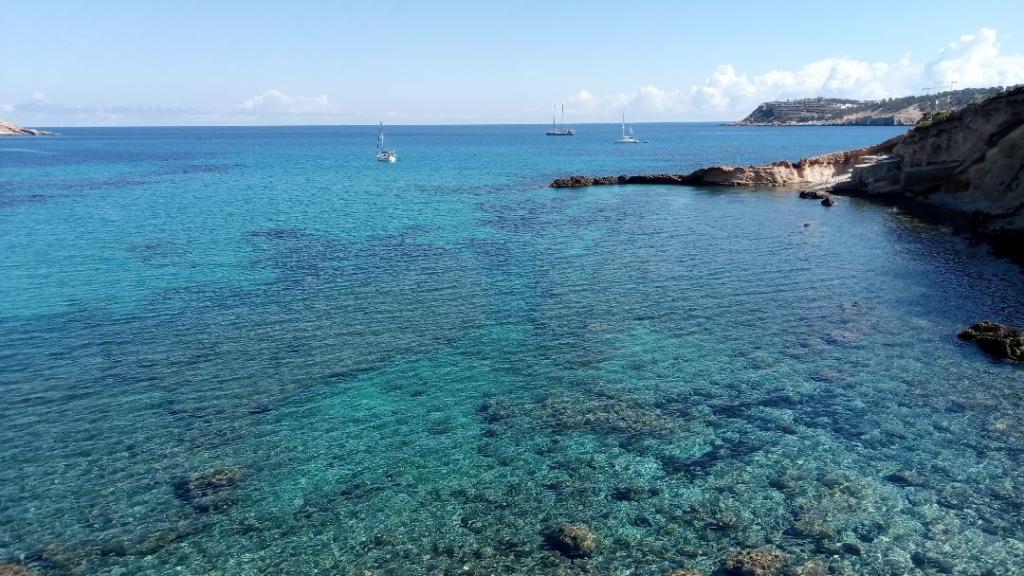
Cala Xarraca, SO in foreground and Tara the twin masted boat
Thursday 15th May
Monday with a forecast F4 till mid afternoon I made a dawn departure from San Antonio bound for the Spanish Main. The only concern was that wind would steadily veer from NW, a beam reach, to NE, a dead run, and decrease. So for the first 7 hours I covered most of the distance and threw the towel in to motor the last 8 nm. I pulled into a bay next to Morayra, which despite being tucked behind a huge rock headland still suffered from swell. So I laid out the kedge and was glad of it when the wind died for the night. In the morning two other boats anchored nearby and lying horizontally to the beach, were rolling horribly.
Tuesday, very liight wind, sea breeze basically, expected but I set off in hope of covering at least some miles south. The coastline is very built up and when I reached Benidorm Bay I could not believe my eyes, towering skyscrapers. There is simply nowhere in the 15 mile length of the bay that is either available or suitable to anchor and with a failing wind by 3pm there was no way of reaching beyond without motoring. However Benidorm Island, a couple of miles offshore has half a dozen mooring buoys, just perfect. There is a large colony of black tipped gulls there and they were making their presence known.
Wednesday an ambitious goal was set, of reaching Mar Menor (the inland sea), some 58 nm distant south. Ambitious because wind was from astern and only reaching moderate for a few hours. It’s another rather ugly landscape of resorts, so with little of interest to see, and more wind offshore, I headed out to sea. Later I was very glad I had as the sky went a formidable dark grey, almost black, and heavy rainstorms were sweeping south following the coast. By the time I headed back inshore late afternoon, the storms were petering out as the mountains fell away to the plains. The wind died altogether by 1900hrs and so motored the last 10nm into the outer harbour at the canal entrance to Mar Menor. It’s a strange place where once a port of some sort existed but now all that remains are derelict structures some above and some below water. It was just still light as I manoeuvred into a spot to anchor.
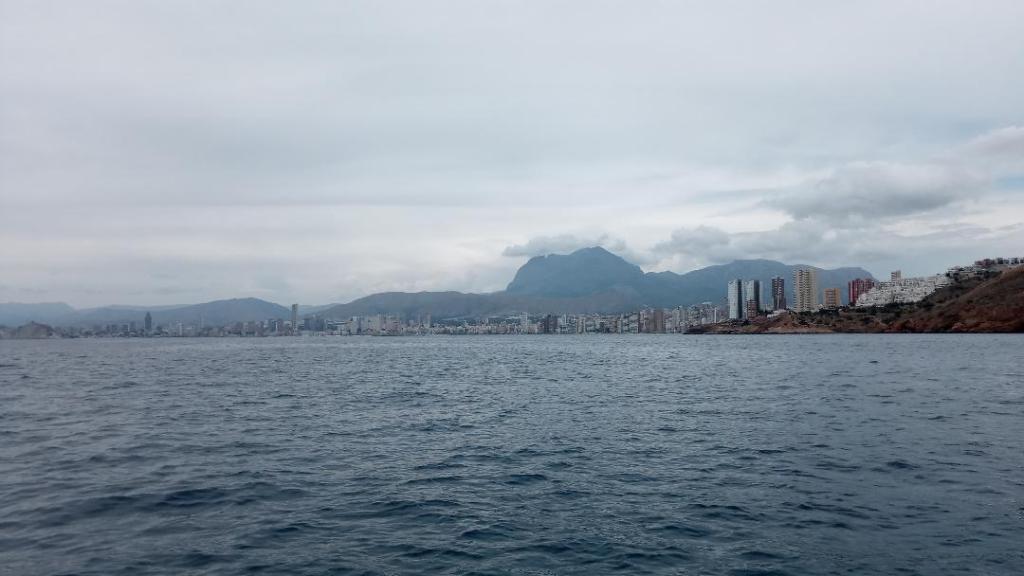
Benidorm
Monday 19th May
Thursday – the remaining 250nm to Gibraltar are going to be the hardest as it involves coastal sailing so overnight passages are not an option, winds are very fickle, and sheltered anchorages are few. I left Mar Menor on a nice beam reach and rounded Cabo de Palos. Continuing in a SW direction and passing a few miles off Cartegena, an ominous thunderstorm was arising in the mountains. This time I could see my name was on it, there was going to be no avoiding the inevitable, and so usual precautions were taken. It pelted down for ages and had a long tail continuing steady rain for a couple of hours. Winds remained light and then while watching the wind instrument, it suddenly went blank, most likely water had got into the data cable somewhere. After checking the obvious places such as the deck plug, which was fine, I concluded it must be at the top of the mast at the transducer. That would have to wait till I get to Gib to be seen to. I diverted to the nearest anchorage, Cala salitrona, surrounded by tall steep slopes.
Friday, a hot sunny day commenced with the welcome news that the wind instrument had recovered its senses (I just need to avoid rain !) . Had a splendid sail in 10 kts , one tack all the way to Ensenada de La Fuente, tucked under the headland of Cabo Cape. Along the coast the tower blocks and development have given way to poly tunnels, or rather poly football pitches ! They stretch for miles inland up the gently sloping land. In the morning as I left the anchorage I was struck by how many people were out fishing from kayaks and paddle boards.
Saturday dawned with the promise of a day of moderate NE winds. Good progress south was made but with virtually no suitable places to stop for the night I had to press on until early evening. As usual the wind weakened speed dropped off and eta for my destination of San Pedro bay stretched out till after dark. A big sailing boat appeared from behind flying a huge orange cruising chute, overtook me and sailed into the anchorage five miles ahead. Enough was enough so on with the iron sail. The bay has a good beach but it is occupied by a community of tents and shacks.
Sunday, finally the day arrived to round Cabo de Gata, the south eastern tip of Spain. Forecast was for F6 NE veering E so it was going to be a sleigh ride around. As I left the anchorage, the big boat followed me out and we were neck and neck down towards the headland until he put up his orange big boy and soon drew ahead. I was flying just the headsail poled out, in anticipation of the rising wind. It peaked at 26kts but didn’t create too big a sea as we came round the corner on a dead run. On the big boat though suddenly the orange sail vanished and I could see on AIS they had slowed to a drift. As I caught them up it was clear that it had dropped in the sea and was proving a monumental task to get it out. I then headed NW for the port of Aquadulce, a further 20nm, and a shoreside berth for a welcome change.
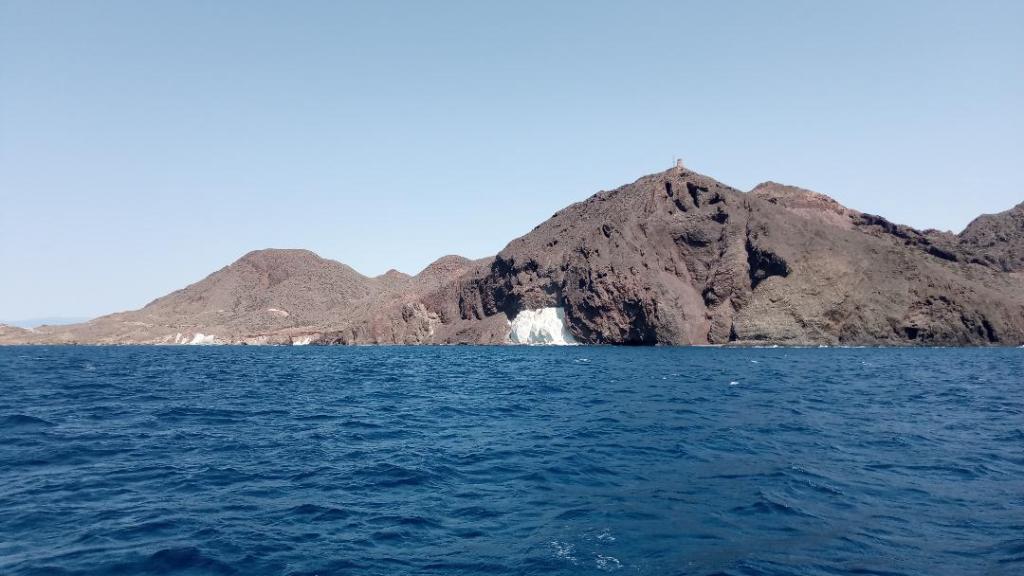
Cabo de Gata and its trademark flash of white rock
Friday 23rd May
My experience of the marina in Aguadulce was very good, laundry, showers, security, bins and reception all as they should be. However the town was not appealing, a tired and run down resort with nothing of note to visit. I stopped at a supermarket and left the bike, but unfortunately had brought the wrong key for the lock, when I came back out it was gone ! Stolen in broad daylight on a busy street. While it was fairly dilapidated after 7 years exposed to the elements, its loss will be an inconvenience.
Tuesday and winds are still light, in fact that’s an exaggeration. I manage to do a further 20nm along the coast, half motoring, and reach Adra, where I anchor just outside the harbour and lay the kedge.
Wednesday and wind forecast a big fat zero, but press on a little further with a lunch stop at Playa del Ruso and then on to Cala La Rijana, just another 18nm altogether.
Thursday and wind arrives. I prepare meals for an overnight sail and set off at midday. It’s initially a beat along the coast before the wind backs and I’m able to start pulling away and set a course directly for Gibraltar, just under 100nm. Late evening the wind is expected to rapidly build to F5 from east, so I reduce sail before dark in anticipation, however it’s not till the wee small hours that it really fills. No moon but it seems like there is because of the huge amount of light pollution coming from the likes of Malaga, Torremolinos and Marbella. I’m crossing the Alboran Sea and at dawn the chart plotter is showing dozens of ships ahead spread over a 30nm patch of sea. They are not transitting to and from the Straits but simply drifting. When I came through here 3 years ago none of these were here. I know ships anchor around Gibraltar because it’s a good crossroads to await orders, but now it seems there are so many that they have to wait offshore.
The Rock appears eventually, shrouded by cloud as is often the case. As I come round the tip of the peninsular i realise too late that I’m over canvassed. Instead of the harbour being sheltered from the easterly wind, it’s subject to katabatic gusts which sweep across the bay with dark grey patches on the otherwise flat water. For the final mile I’m subjected to sudden gusts of up to 26kts on the beam as I weave between anchored ships, before anchoring in the wide shallow bay of La Linea.
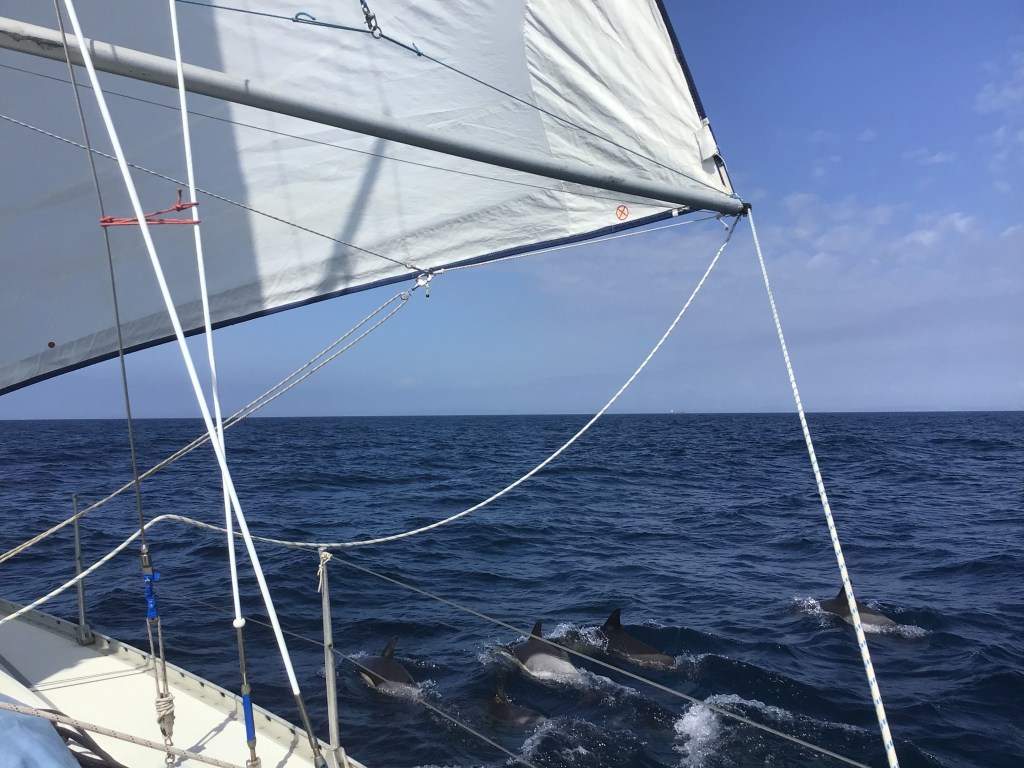
Gibraltar reception party
Wednesday 28th May
On Saturday I walked across the border from La Línea into Gibraltar and so was checked out of Spain before I had even checked in ! On my return I was stamped into Spain so now I’m no longer an illegal alien in Europe. On Sunday I left Alcateras marina and went round to the fuel quay in Ocean Village, which is in Gibraltar, and fuel has a low duty and no VAT. Then I headed off west through the anchorage to the Straits, or orca alley as it’s become known in sailing circles. The biggest concentration of attacks on boats has occurred along this stretch of coast to Barbate. Staying close inshore, around the 20m depth, is one recommended defensive strategy, and the one that I adopted. It’s also almost always very windy, especially around Tarifa on the southern tip of Spain. Forecast today is for it to reach a maximum of 22kts from east so I approach under poled out genoa. In fact the wind maxed at 24kts and as I came around the headland at Tarifa I was set against a 2 kt current which kicked up a big sea. This was to be expected but what I had not bargained for was that because i was keeping inshore, that this current would continue for the next 10nm. So for the next four hours I slogged through a most horrendous sea doing a boat speed of 5kts but just 2.5 kts over the ground. The only consolation was the four boats I passed going the opposite way were having a worse time of it. Eventually as I came around into Barbate bay I was released form the grip of the current and half way across the wind died. However the swell continued and sonanchoring off the beach outside the harbour was untenable. Inside the huge harbour, built for a tuna fishing fleet now much depleted, is a marina in one part of it.
Tuesday the forecast promised a bit of wind so I set off for Cádiz, 36nm north. This stretch of coast is littered with shallows, and wrecks and is where the battle of Trafalgar took place. I followed the Pilot book advice and kept a couple of miles offshore, in about 15m of water so still out of Orca range too. Another boat left after me and took a route close inshore but a few miles on we came upon a tunny net which stretched out from the beach about 2 miles. I passed by but his path was blocked, no gap inshore. I had the current with me this time, about 1kt, but wind still too light to use on its own, so I motor sailed most of the way, doing about 6kts on just 1500 revs. On arrival in Cádiz I headed for Puerto America, just inside the first commercial dock, as there are no places to securely leave a boat at anchor anywhere in the bay.

Trafalgar point. Hard to imagine the battle here
Monday 2nd June
Thursday. It is difficult planning the next few passages as forecasts keep changing. anchorages are up Rio’s, some have shallow sand bars and therefore not tenable with strong onshore winds, while others have deep entrances but strong tidal currents and are busy with shipping. I decide to head for the Rio Odiel based on a good wind forecast and it turned out to be a fine passage. Belting along on a broad reach at 6 to 7 kts most of the day I covered the 45nm by 18.30 and anchored just outside Mazagon harbour, out of the main stream. Sizeable ships serving the container port and oil refinery a few miles upstream, were regularly passing close by.
Friday after a not so comfortable night I make use of the slight afternoon sea breeze to move a little further west, to the estuary of the Rio Piedras, just 12nm. Its a pleasant sail in about 8 kts on the beam and flat water. The entrance to this Rio has a very shallow bar so I arrive about an hour before HW and have a minimum of 1.8m under the keel. Imagine somewhere like Sandbanks, Pool Harbour, on steroids and you might have a picture of the place. Teeming with all manor of water craft, long sandy spit, beautiful properties lining the shore. I go about 4nm upstream where it’s much quieter and the shore becomes a nature reserve. I tuck into the shore, just 100m off, in a minimum of 4m depth and out of the main channel. There is a marina further upstream so sadly there is still a regular flow of speed boats and jet skis returning all evening, but eventually peace.
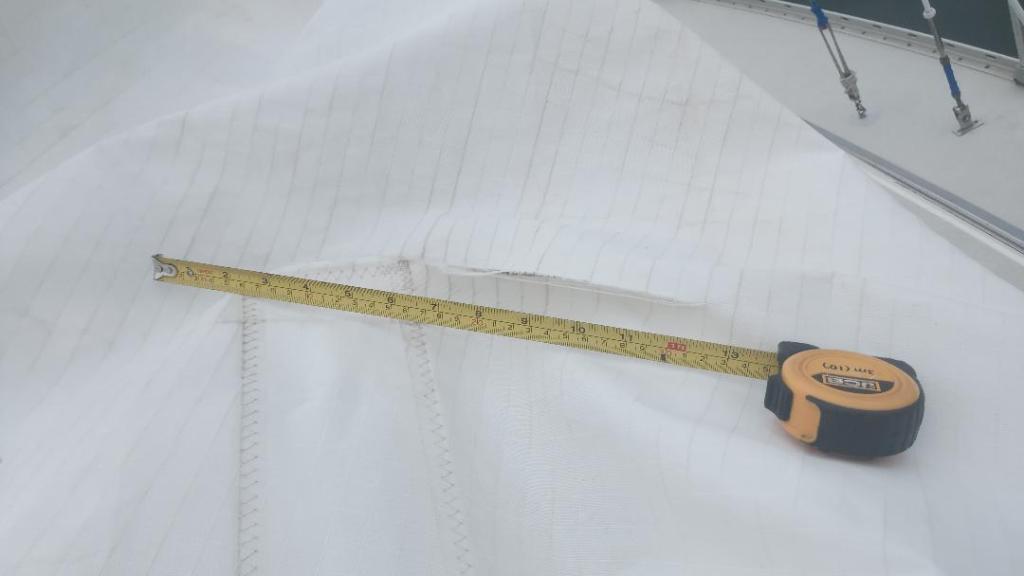
Sunday . Headed back down the channel to the entrance of the estuary and cleared the bar just after HW. Set course for Culatra Island near Faro, an enormous lagoon lies behind this island and a collection of others. It’s promising a nice F4 on the beam for much of the day so expect to arrive at the entrance a couple of hours before HW. It’s only possible to get in with the flood, slack water lasts a very short time. I see no ships or fishing boats at all in this region, but after crossing into Portuguese waters there are fields of pots that I weave my way through. After a fast sail in a wind which reached F5 much of the time, mid afternoon it vanished and I motored the last 8 nm, past a couple of fish farms, and into the entrance channel. Here the flood was in full swing, about 4kts, so swiftly carried us around to an anchorage just beyond the village. In the distance, across a few miles of mud flats and shallow channels, are the towns of Faro and Olhao. It’s very peaceful, at least once the fishermen, in their traditional long narrow open boats with powerful outboards, have gone home. The bad news though is I have an 12 inch tear in the mainsail ! There is no obvious reason for it as it’s almost in the centre and not a place of high stress. So I’m concerned it’s due to the cloth having significantly weakened with UV over the last 6 years, in which case a repair may not last long.
Sunday 8th June
Having been pinned down in Culatra for three days by strong north westerly winds every day from midday till mid evening and forecast to continue for many days to come, the only way forward was going to have to be a night sail. So on Wednesday evening before dark I extracted the hook buried deep in the sand and mud, and sailed to the entrance of the lagoon where I anchored to wait an hour or so for the tide to turn. Unlike other night sails which have been across open water, this one was going to be along the coast, 40 nm to Lagos, and brought with it inherent risks. The biggest risk was going to be running over a pot and fouling the rudder or prop, and then there are numerous fishing boats, not on AIS, and prone to milling around in unpredictable directions. Obviously there is also the hazard of an altercation with the hard stuff, but a less obvious hazard is not being able to identify lights of boats and navigation marks set against the blazing lights ashore. Taking naps was not going to be an option. I had barely left the entrance and turned the corner to set course NW to Lagos, when I passed the first pot by less than half a boat length ! On the plus side though I had a F4 / 5 from North all night so had a fast and comfortable sail, being just 8 nm from destination by dawn, and I anchored off the beach. The mainsail tear that I had temporarily patched up with tape, had held out well, however I had arranged for a sailmaker to do a proper repair, so I took it into the marina in the dinghy to handover to him.
On Saturday I went into the marina for a night. Quite nostalgic, back in almost the same place at the same time 6 years on, and seems like yesterday. See photos below, some have aged better than others !
Sunday and the sail is repaired and back on the boom. Refilled with water, restocked provisions and forecast looking favourable to transit the west coast over the next few days, time will tell. I’ll leave here and spend tonight in Sagres bay, close to Cabo San Vicente, for a dawn start of the next leg of the journey.
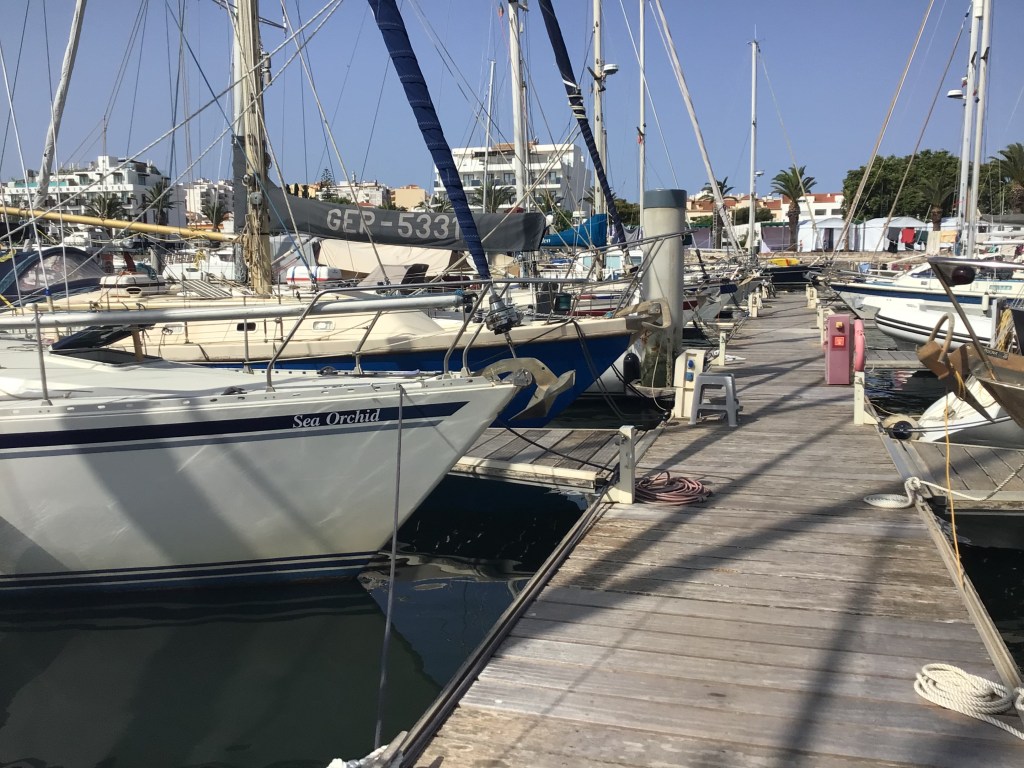
Lagos Marina
Saturday 14th June
I am writing this post from northern Spain !! One week ago the idea of being here now seemed a very remote possibility. Against all odds and with the gods on my side I have been able to fully capitalise on an infrequent spell of southerly winds which kicked in on Monday morning and died out on Friday afternoon. In that time I managed to cover nearly 350nm, a journey that I had fully expected to take at least two weeks with the normal northerly trades. It went like this:
Sunday left Lagos and sailed the short distance to the tip of SW Portugal, anchoring in Sagres bay, ready for an early start Monday when the wind from South would start to fill.
Monday I rounded Cap San Vincent and the long Atlantic swell made its presence known, coming in from NW like rolling hills. Forecast steady F5 turned into an erratic F7, where I seemed to be riding the leading edge of a bunch of wind moving slowly northward. Reefs were going in and out on both sails all day, in an effort to keep the boat balanced and not broach. The sea became a jumbled mass of uncoordinated lumps of water with wind from one direction, current from another, and swell from yet a third. On the plus side though I was doing over 6kts much of the time. I arrived in Sines harbour as the light dwindled. It’s a very small area for anchoring and already there were 5 boats there but luck was on my side and there was one space left, at least for a little one.
Tuesday forecast was for light SW wind so set course NW destination Cascais. Although it was a beam reach, the sea state was again rough and the wind too light to keep pressure in the sails. So for much of the time I motor sailed in order to drive more pressure into the sails and stop slapping. Again I arrived just as it was going dark and was able to anchor out of the swell in the shelter of the breakwater.
Wednesday forecast indicated S to SW F4/5 winds would continue for the next 36 hours so I prepared for an overnight passage with a goal of reaching Porto, some 170 nm. I would be passing Peniche and Figueira da Foz along the way so if progress was slower than hoped for then I could stop. As it turned out I averaged over 6 kts and passed Peniche early evening. As the forecast was holding good I pressed on but was now committed to reaching Porto as the swell was now so significant from SW an entry in Figueira would be untenable.
Thursday morning I was on course for an eta Porto of 1800hrs. I was now steaming along at over 7 kts on a broad reach in a good F5 and with a strong northerly current of at least 1kt under the boat. I had seen just one other boat, travelling north and slowly closing it passed astern within a few boat lengths, just as the first signs of daylight were appearing in the east. I decided to go to Pavoa de Vazim a few miles north of Porto as the forecast for Friday was for continuing S wind and therefore I had a chance to reach the first of the Spanish Rias where there is good shelter from gales. However the entrance to Pavoa harbour faces SW, like most of them on the west coast, designed to enable entry in the normal strong NW trades. It was therefore facing the significant SW swell and made for an exciting entrance with enormous breaking waves on either side. Once inside I was directed over vhf to head for a particular pontoon and as I turned a corner I came to a grinding halt, run aground on an unmarked sand bank. Tide was ebbing but with engine at full revs and alternating between reverse and forward I managed to turn the boat around and drive off. When I reached the pontoon the waiting marinero, who had been calling on vhf, was wondering what took me so long !
Friday, with just 45nm left to Baiona, it was to be a repeat of the previous two days, S to SW F5 and still a knot of current in my favour. The exit from the harbour was again exciting as enormous swells rolled into the entrance, Sea Orchid took them head on, climbing up and up at what seemed an impossible gradient, all I could see ahead was sky before reaching the top and looking down on the world around. The last of the southerly winds finally evaporated mid afternoon, exactly as forecast 5 days previously, and I motored the last 8nm into Ria de Vigo and into the very well protected anchorage of Baiona Bay. It had been an epic dash from Lagos, taking just 5 days, but so worth the effort as now I can explore this sheltered Ria while northerly gales blow.
Monday 23rd June
Since arriving in Baiona just over a week ago I’ve been exploring the Rias Bajas, south of Finisterre. It’s been largely cool particularly at night, down to 15c, with fog out to sea and poor visibility and light winds up the Rias.
Some parts of the Rias have extensive shallows and numerous skerries and low rocky islands, much like the Scillies. The land is granite which along shorelines has been moulded into rounded outcrops. There is an abundance of cormorants and many pods of dolphins patrolling the outer reaches. Bays are backed by beaches of white sand which generally provide good holding except where the bottom has a layer of seaweed, usually in depths over 6m. Many bays are occupied by extensive mussel farms, large rafts organised into groups of dozens, spaced a few boat lengths apart so it is possible to go between them, but they are unlit so arrival in a bay at night can be tricky. When passing downwind of them there is strong smell of old rope.
In Ria de Vigo, from Baiona I visited the town of Moaña. It’s a busy stretch of water with ferries crisscrossing between the city of Vigo and towns on the northern side. It took three attempts to get the anchor to grip through weed. There was a rowing gig regatta on, teams of 14 with 6 pairs of oarsmen, one more in the bow and one at the stern steering with an oar. I visited Punta Robaleira on the northern side, it is endowed with no less than three lighthouses.
In Ria Pontevedra I anchored at the town of Bueu, a place famous for its sardine processing industry, in recent history and as far back as Roman times. I visited Pontevedra, the capital city of Galicia. There is evidence of human habitation in this area a staggering 450,000 years ago. Our old friends the Phoenicians made it this far and shipbuilding remains active today. The city sits on the Portugal leg of the Camino Santiago de Compostela and in the church in Peregrina Square the pilgrims were queuing to have their Camino passports stamped.
In Ria Arousa I visited the Isle of Arousa for its Parque Natural de Carreiron and the town of
Ribeira …. for its Lidl ! Then on to Palmeira and Praia da Corna to shelter from a northerly blow.
After a week of pottering and waiting for a fair wind to continue north, today I shot out of the Ria with a F7 tail wind, negotiating an abundance of reefs, and arriving back out in open Atlantic swell. At the same time the wind went from 28kts to 4kts in the space of half a mile as I turned north and came into the lee of Serra Da Barbanza hills. So I’ve pulled into the charming little harbour of Corrubedo, a place that could pass for any number of ancient fishing harbours in Cornwall or west coasts of Wales or Scotland. In fact it is said to be the place where the bones of St James were landed from the ship that had sailed from Palestine, and were then transported to Santiago de Compostela.

Punta Robaleira with its three lighthouses
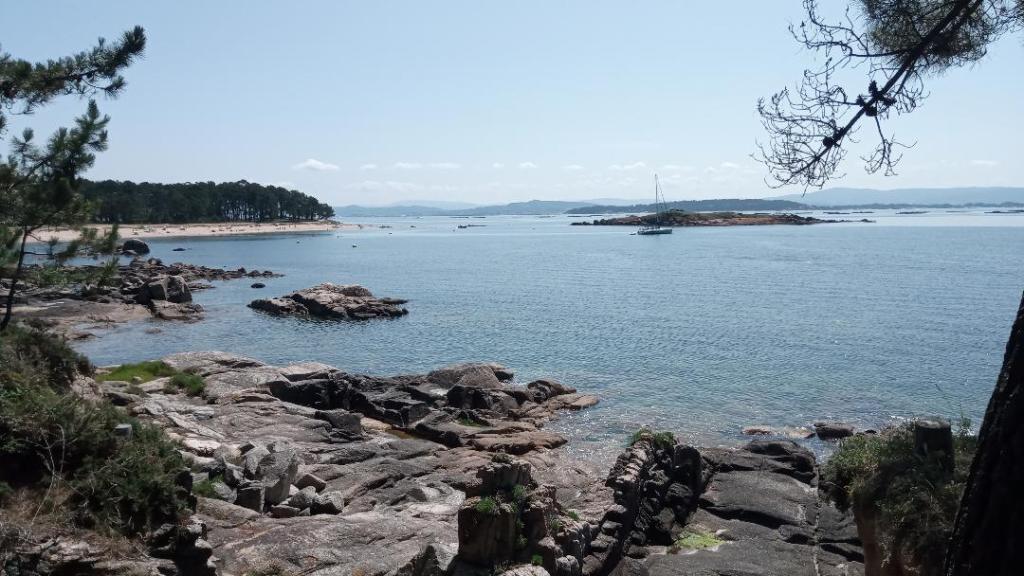
Praia da Corna
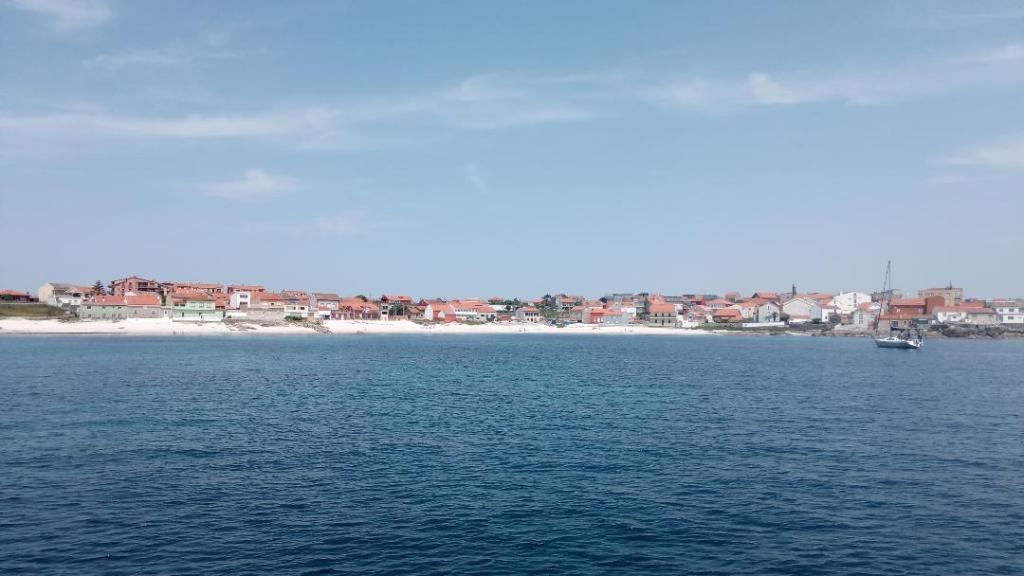
Corrubedo
Friday 26th June
Tuesday, there was thick fog as I left Corrubedo but a nice F4 and flattish water as I headed north for Cap Finisterre. I fired up the radar, something not done since I don’t know when. At times the wind reached a F5 and SO surged along goose winged with plenty of pressure in the sails to withstand being upset by the inevitable swell from NW. We remained in our bubble with about a quarter mile 360 horizon, until coming into the lee of the Cap, which then emerged from the gloom along with the breakwater of Finisterre harbour. There is a splendid pontoon to which I moored on the inside, free berthing, water and electric, not often you can say that !
Wednesday morning started gloomy again with low thick cloud shrouding the top of Cap Finisterre as I beat back down to the lighthouse. Then it was north and east on a dead run F4 so enough wind to keep the goose winged sails pulling nicely. I had company in the form of an Ovni 45, a fast planing downwind boat which would normally leave me standing. But because we were on a dead run, his asymmetric foresails were no use and he was struggling to keep a genoa pulling without a pole. I even overtook him to reach Laxe anchorage first, nothing like a bit of competition ! As we approached Laxe I could see huge numbers of boats sailing in from the opposite direction, and on the plotter already many boats at anchor. It seemed that we had coincided with a major rally and the best part of the anchorage behind the breakwater was full, but it’s a big sandy bay so still plenty of room further along.
Thursday I raised anchor just as all the other boats decided to as well, so it was a crowded exit from the harbour. Forecast was similar to previous two days but lighter wind, so again I goose winged as I headed further east, destination La Coruna. By late morning the wind was too light to stop sails slapping so I reluctantly resorted to motor the rest of the way. La Coruna is the major sailing port of northern Spain, where boats crossing Biscay often head to, and it has had strong links with UK for millennia. I went into the marina to fill up with fuel, almost a tank full having been used since Gibraltar. After recovering from the shock of the bill, (half as much again as Gibraltar and double that of Tunisia) I sailed over to a quiet anchorage in Ensenada de Mera, opposite the city.

Cap Finisterre
Friday 11th July
Since arriving in La Coruna, two weeks ago now, the constant strong north easterly winds have kept me pinned down in the Rias which have provided good shelter and plenty of interest. The scenery is some of the best, rolling hills, wooded shorelines and white sandy beaches, without the acres of mussel rafts that blight the Rias further south. Redes village is notably charming with its preserved 18th and 19th century Galician buildings, as is the town of Pontedeume.
On Sunday there was a short break in the strong NE winds so I headed out along with half a dozen other boats all hoping to get round the far NE corner of Spain. In a lumpy sea and big swell, following days of northerly gales, there was just enough pressure in the sails on a dead run. Under a heavily overcast sky we passed one headland after another before arriving in Ria de Viveiro. I anchored off the small village of Bares just inside the entrance on the west side. Sadly it didn’t provide much respite from the swell so it was an uncomfortable night.
Monday and the forecast promised a moderate northerly wind which should do nicely for a reach east and south east to the next stop, Ribadeo. However it was not to be, instead it was light to nothing and impossible to keep any wind in the sails. I ended up motoring the whole 20nm being tossed about in the continuing confused lumpy sea, a day not to remember. Two more days of strong easterly winds meant staying put again but plenty of interest in the town and coastal walks. It is noted for its grand residences built by entrepreneurs who emigrated to South America in late 19th century and made a fortune before returning to their home town.
Thursday and at last the winds from NE have abated so I make an early exit from the Ria Ribadeo and head due east bound for Aviles, about 45nm. Forecast is for moderate easterly so progress might be slow and if too slow then there is an anchorage of sorts half way which will have to do. As it turns out there is no wind till about 1300 so once again a lot of tedious motoring in a lumpy sea. But then a fine F4 from north of east filled in and flattened the sea, so we purred along just managing to lay the course to the river entrance at Aviles. This coast is known as the Costa Verde and you can guess why, green fields stretch from the low cliffs to the foot of rolling hills blanketed with forests. There are however a number of large blots on the landscape, industrial plants such as steel production. On entering the river it is lined on both sides with heavy industry, notably huge sections of wind turbine towers line the quays. However across the railway line that runs behind the marina and you enter a beautiful old city. In UK I don’t recall ever seeing tourist promotion of this region which has a lot to offer.
Tomorrow it’s looking good to embark on the 250nm crossing of Biscay to La Rochelle and the start of the final leg of the journey, south Brittany.

the formidable NE corner of Spain.
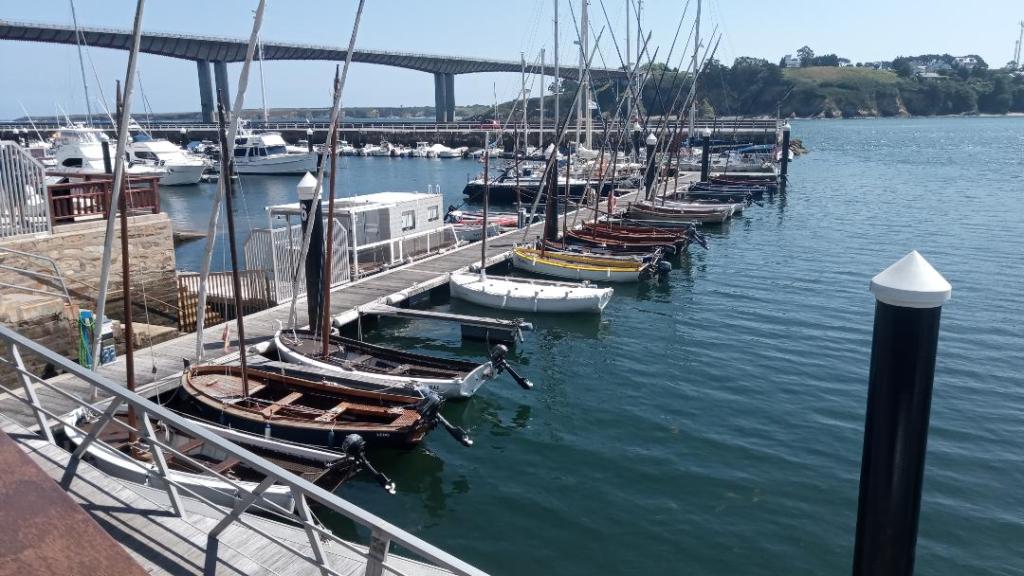
traditional day boats
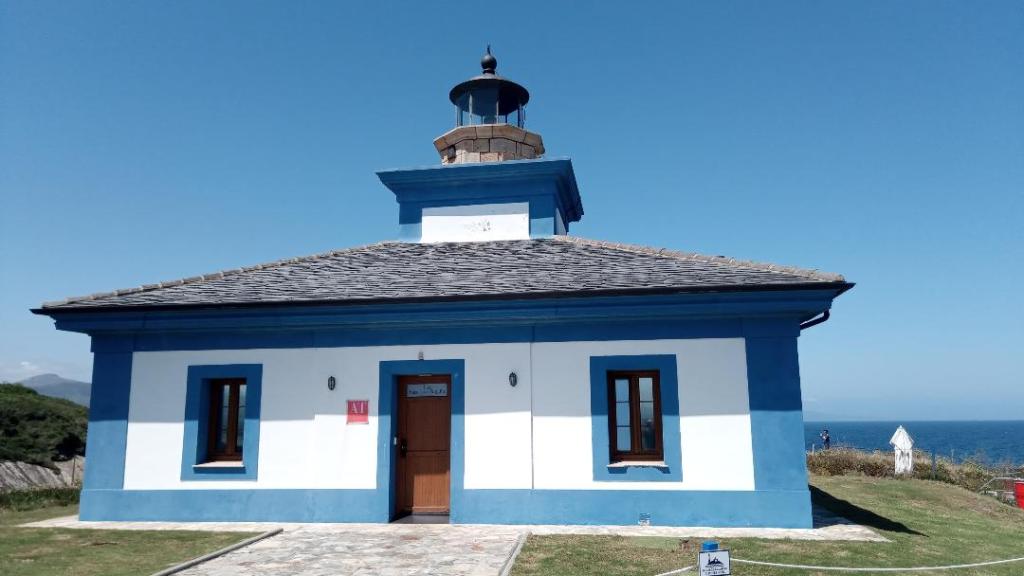
the prettiest lighthouse I’ve ever seen
Monday 14th July
From Aviles to La Rochelle is 250nm NE. For the next 3 days the forecast is W to NW F4 to 5, pretty much as good as it is likely to get to make this passage, for this part of Biscay. We should be able to average 5 knots so that will be 50 hours, eta 0800 on Monday leaving 0800 on Saturday. Tide is ebbing as I leave the marina so shoot down river and out of the entrance, but wind does not fill in for a couple of hours. By mid afternoon the coast of Spain is vanishing in the haze about 30nm distant. As evening approaches the wind continues to strengthen, now ranging from 14 to 19kts. I’m just managing to hold the genoa poled out, on the same tack as the full main, but in this configuration the range of angle to the wind is very limited, about 140 to 160 degrees. There is a 2m sea on the quarter which is dramatically affecting steering and ability to hold a course. With hand steering it is difficult to keep within a margin of 10 degrees either side and the autopilot struggles to stay within 20 degrees, so forever veering between something like 170 and 130 degrees to wind, causing the genoa to collapse. I put a double reef in the main for the night to slow down and relieve pressure on the rudder. In the early hours the autopilot alarm awakes me from a short nap. Low voltage has caused it to disconnect, it had been working so hard trying to correct course for every wave impact and so run the batteries down. The drain was aggravated by the fact that about a week ago I noticed one of my two solar arrays was not putting anything into the batteries, and so they were already depleted before the night started. So I had to run the engine for an hour to put enough charge in for the autopilot to get through the rest of the night.
The following day saw continued good progress maintaining an average 5kts. Late afternoon the wind increased to 24kts and we were surfing down waves at up to 8kts. I took the main down altogether, steering being made much easier under headsail alone. This part of Biscay is a desolate area, it’s not on the route to anywhere for shipping and even the fishing boats were absent. Strangely, about the only bird to visit was an egret, or at least something that looked very much like one. The day was largely cloudy so the one solar array still working had not managed to fully charge batteries, so I ran the engine another hour before dusk. During the second night the wind faded to about 14kts and with it the speed, so that by sunrise at 0700 we still had 16nm to go. The coast is so flat and low here that I only had my first glimpse of Ille D’Oleron at about 10nm. The wind then died away and I motored around the northern end of the island against a tide ebbing at 1 to 2kts. I finally anchored at 11.00 off Saint Denis, exactly 51 hours passage time. Tomorrow I’ll sail over to La Rochelle where Amanda will join ship.

Sunrise over La Rochelle
Friday 25th July
The past week Amanda and I have explored La Rochelle and Saint Martin on Ile de Re. In La Rochelle I docked in the Old Harbour outer basin which is bang in the centre of town. There are two other locked basins adjacent but we were in the tidal one which meant we were not subject to gate opening hours. It is full on holiday season here now so lots going on, a bit noisy in the evening but quietened down before midnight. The old town is magnificent, beautiful buildings line cobbled streets, all traffic free, but you do have to watch that you don’t step into the bike lanes which are also frequented by electric bikes and scooters travelling at speed. Despite the town changing hands between the French and English several times over the centuries, and it being a battle ground between Catholics and Huguenot Protestants, it has survived remarkably intact.
Just a few miles away is Ile de Re, a famous holiday island and now connected to the mainland by a bridge. The coastline is very shallow and all the harbours dry out except for Saint Martin which is like a scaled down La Rochelle with its locked dock in the centre of town. We moored rafted on the outside of two other boats. It is a beautiful place with old stone buildings lining the waterside, all through narrow back streets, and out to the enormous battlements that surround the town. It took 12000 men 10 years in the late 1600s to construct the defences which seem out of proportion for a small island town until you understand that it was in fact the first line of defence against attack on La Rochelle.
After Amanda flew home I sailed back over to the south eastern tip of Ile de Re where there is the only anchorage in the whole area that is sheltered from NW. It was blowing 24 kts off the beach by the time I arrived, not in itself a problem, but the swell down the eastern side of the island was hitting the breakwater of La Pallace commercial port, just half a mile opposite, and ricocheting back onto us. Diabolical rolling ensued !
Yesterday I set off early to sail to Les Sables D’Olonne, 30nm north west. Forecast was for F4 N till late morning when it would back NW and increase to F6 by late afternoon. So I was keen to avoid as much as possible beating into the teeth of the wind and sea. Sadly though I was defeated by the complex tidal streams between the east side of Ille de Re and the mainland, and covered just half the distance by early afternoon, by which time I was tracking only 70 degrees to the wind. For the first time I can ever recall I threw the towel in and returned to where I started.
Today I had a cunning plan to tackle the same journey, with the exact same forecast. I went west about the island, sailing one stbd tack NW first then one port tack N when the wind backed, and by leaving at 05.30 I caught 7 hours of favourable tide. It worked a treat, arriving at Les Sables at 13.30 just as wind and sea were rising. Les Sables is the pre-eminent sailing venue of France, where many round the world races start and finish, such as the Vendee Globe. There are a few of those boats here, like in the photo below although that particular one was in La Rochelle.
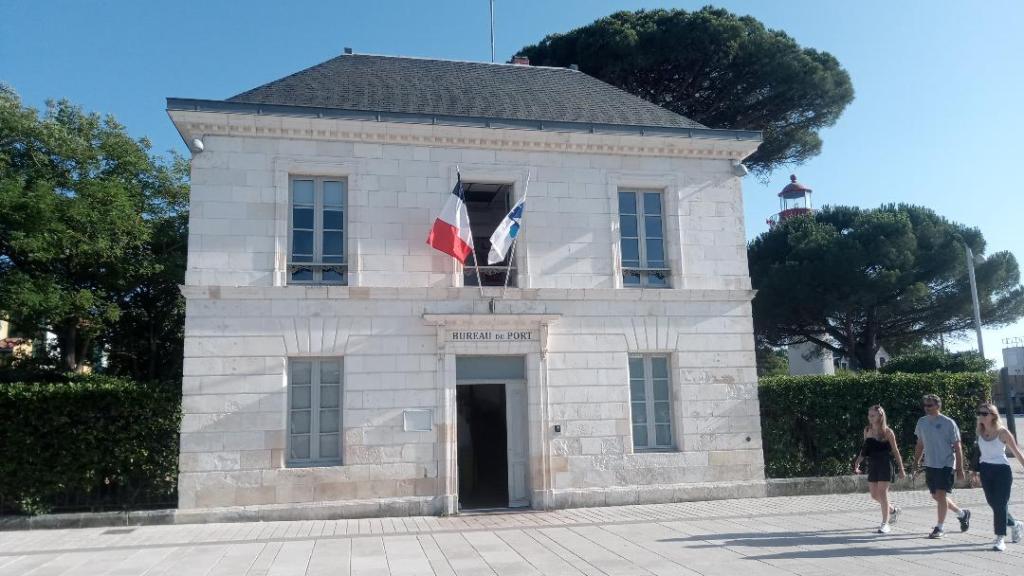
The prettiest harbour office I’ve ever seen, La Rochelle
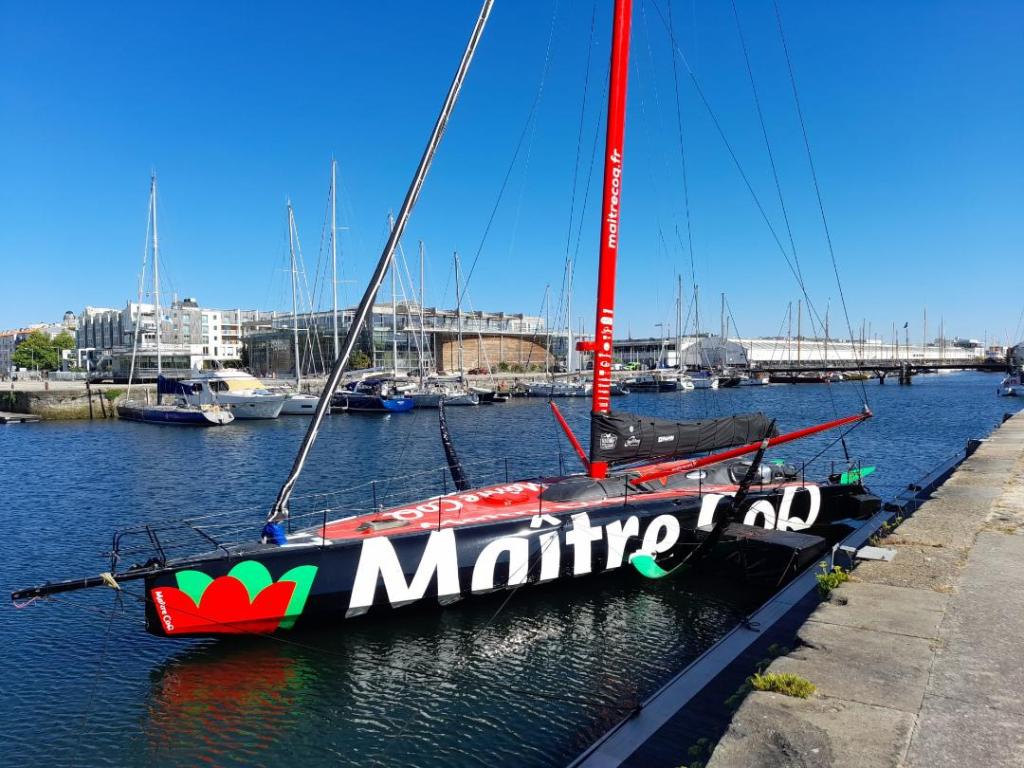
whacky boats

La Rochelle tidal basin
Tuesday 29th July
Saturday, Les Sables didn’t hold much attraction despite its description on Navily as the mythical port of the famous Vendee Globe race. It will have to remain mythical for me. Usual forecast of F4 to 5, N backing W, but with no real choice of direction to go I headed out NW in the hope of reaching Ile D’Yeu eventually. It was hard going as I beat into a choppy sea, short waves just steep enough and an interval long enough to make SO hobby horse and virtually grind to a halt every few minutes. Things did improve later as the wind came round to W and increased but the down side was that the anchorage became not so sheltered.
Sunday, after a very uncomfortable night, I headed north for Ile Noirmoutier. Again it needed a plan that would combine the changes in both wind and tide over the course of the day. Winds persist in their daily pattern of starting N, backing to NW around late morning and continuing to back to W by mid afternoon and increasing. In essence the plan was to tack west until the backing wind meant I could lay a course on port to the slack water just S of Noirmoutier, then tack back west again to pick up the north going tide and tack back around the top of the island. It worked a treat although I only squeaked around the northern corner, with depth down to just 3m under the keel. The anchorage was never going to be great despite its apparent shelter from west swell, but when wind veered back to NW in the evening and tide turned the boat swung broadside to a short chop and induced severe rolling till the early hours. There seem to be no anchorages in this whole region that are good in both west and north winds.
Monday, had to forego a day ashore on the island as the anchorage so poor. Instead headed NW for La Turballe, only 23nm as the seagull flies but with the usual forecast for the day it would be at least half as much again, and there is no other place to go to stop the night. Deploying the same strategy as yesterday, it turned out to be a really pleasant passage with good sea conditions this time. There are a multitude of sailing boats around now and when I arrived at La Turballe I was fifth in line to be escorted to a berth. But the marinero was very efficient in her purpose built craft with huge rubber bumpers all round which she used to great effect to push those not quite in command of their ship, into their berth. Not me though I hasten to add !
Tuesday, I actually have a choice of destination for a change. It’s either Morbihan or Ile Houat. Forecast is the same again and both places are upwind. The final decision will be made when I reach Pointe de St Jaques. It is another good beat in F4 on flat water and I decide to go to Houat where reports on Navily indicate that it is the best anchorage in the region. Indeed I would agree it is, on first impressions, a wide sandy bay completely sheltered from SW to N. Mind you everyone else thinks the same as there are well over 100 others anchored, but room for plenty more.
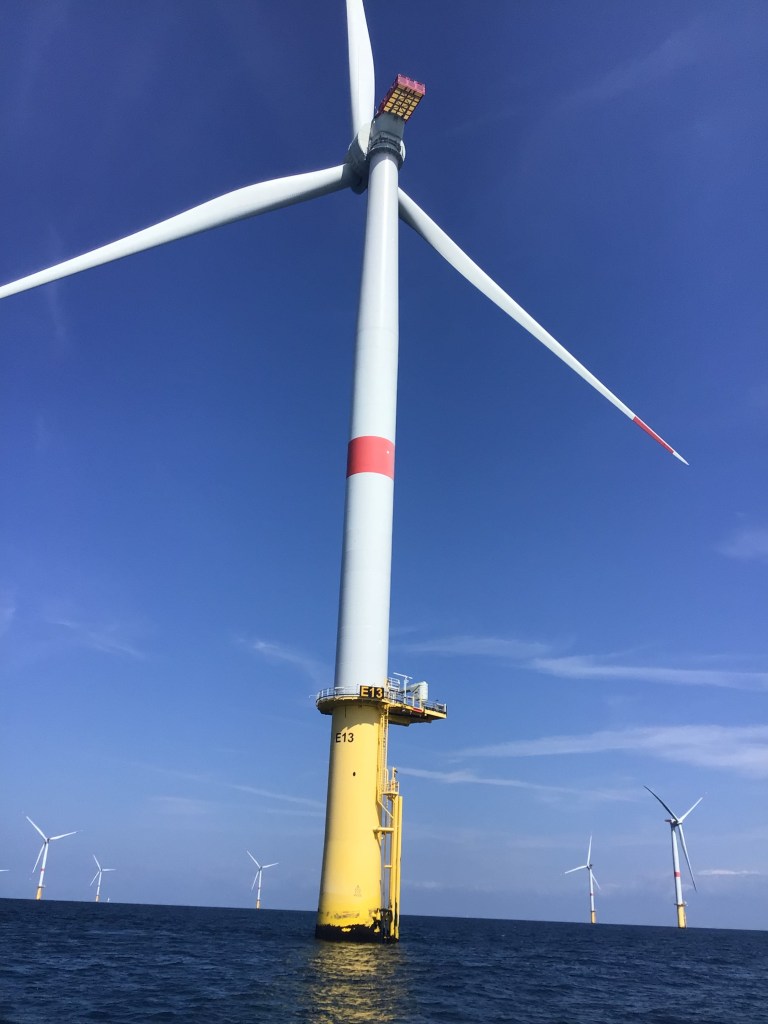
Came on deck wondering what that whirring noise was …
Sunday 3rd August
Wednesday, after a good night on the anchorage, I walked the length of Houat, renowned for its wild flowers, dunes and quiet laid back holiday atmosphere. Of course it is now the height of the holiday season so the village was far from quiet, the ferry unloading day trippers and campers by the dozen, but they soon spread out across the multitude of paths and coves. It reminded me a lot of the Scillies, flat, with few trees and lots of gorse, the only traffic the odd tractor.
Thursday the winds and tide leant heavily in favour of going west and not north so I reluctantly decided to forego the gulf of Morbihan and make for the next island Belle Ile. It was very slow progress covering just the 10nm to the port of Sauzon. Despite its proximity to Houat it looked completely different from sea, much higher and forested and is regarded as the name suggests. I was about to make the final tack into the anchorage when I could see how limited room there would be, and the afternoon breeze was just filling in. With 18nm to the next island Ile de Groix, on my direct heading, I decided not to miss the opportunity of a good sail, especially as the next day’s forecast indicated that it would be hopeless getting there. Just 4 hours later I pulled into the spacious anchorage on the south eastern end.
Saturday, after exploring Ile Groix, an island I would liken to a French Jersey, I headed off NW in a very light wind. After an hour of motoring there was just enough wind, 8kts to start beating up the NE side of Groix. I had in mind anchoring off Pointe de Trevignon on the mainland side but if progress was good I would carry on into Baie de La Foret, west of Benodet. Progress was good as the tide turned in my favour, so after weaving through a forest of pots off the Pointe I continued to a good anchorage off Bot Conan, just below the enormous chateaux. From here I will plot the final steps to reach Brest for checkout of EU. Combining the timing of fearsome tides on this corner, with forecast winds, and suitable anchorages, is a three dimension puzzle, where getting two to work in harmony is feasible but all three a near impossibility !

Ile d’Houat with Belle Ile in the distance
Thursday 7th August
So the stars are coming into alignment and a plan is emerging, if just one step at a time. On Tuesday I left the anchorage at Ben Miel at 0500 to catch the ebbing tide running west out of Benodet Bay and benefit from a light northerly wind on the beam for added propulsion. It is 15nm to the corner, Penmarch point, and want to be there around 0900, slack water, in order to then catch the start of the flood tide north up to Audierne, another 15nm. It’s just 14 degrees now in the wee small hours and the deck is running with condensation so I’m fully togged up for the passage. I slip out of the anchorage in pitch darkness, aiming for what I remember to be clear water outside the moorings (boats on moorings don’t carry an anchor light). But once clear there is then the risk of running over a fishing pot. An hour later the first signs of light appear in the eastern sky and we are well on the way doing 4kts. I reach Penmarch in good time, the wind comes around to NW and the sea becomes lumpy, now the hard bit starts. The next six hours we are beating north into a rising wind and sea. The favourable tide doesn’t seem to be helping much as we zig zag back and forth, closing the distance to go by just 2nm every hour. At 1400 the tide slackens and by 1500 it’s against us and I’m still 2m off Audierne ! We eventually drop anchor at 1600.
Wednesday it’s a similar plan, I leave at 0700 to catch the west going tide to Pointe du Raz 9nm away. The Raz is a channel between the Pointe and Ile de Sein where currents are very strong and in strong winds has a notorious reputation for dangerous overfalls. I time it to arrive at 0900, slack water, but this time motoring as there is no wind until we reach the Pointe. I’m leading a pack of a dozen boats all heading the same way. As we round the light standing on the last rock from shore, the sea is flat save for the long Atlantic swells that lift us up and down gently a couple of meters. The tide turns north and with a few knots of breeze from ENE we hold a course for Pointe du Toulinguet, a further 12nm. Later the wind fades and I motor around the Pointe into the splendid bay at Cameret to anchor at 1400.
Today the day has arrived to check out of France and the EU. It’s a three hour sail from Camaret across the bay, through the narrow Goulet de Brest, and into Port du Chateaux. I filled up on diesel before taking a berth. Then it was a short walk to the Douane office (Customs and Immigration), where it took all of two minutes to get a stamp out in my passport, and no insistence that I set sail immediately ! Such a difference from the red tape in southern European countries. I have also complied with UK Border Force regulations by submitting a passage plan online within 24 hours of departing.
So tomorrow Sea Orchid will set sail for England hoping to make landfall somewhere near Falmouth before nightfall on Saturday, six years and two months after leaving Plymouth.

Ben Meil

Raz de Sein
Saturday 9th August
Friday I left Brest at 0830 and caught the last three hours of the ebb through the Goulet and along to Pointe St Matthew where I arrived just in time for the start of the flood north through the Channel du Four. This carried me clear of Ushant and the north mainland coast in near flat calm conditions, as I set a course for Penzance, 95 nm NNE. Most of the day I had to motor sail, France slowly disappearing into the haze. Only a couple of other boats crossed my path. I was accompanied by leaping porpoises for long periods, they never seem to tire of amusing each other, and me, with their antics around the boat. Early evening I crossed the exit of the east going traffic separation system, spewing out a constant procession of ships about three miles apart. The gaps look large but I find that you have to pass very close astern of one vessel to be sure of clearing the bow of the next. In the end I had to call up the ship I was passing ahead of (I am the stand on vessel when they are coming from my left) and ask him to alter course astern of me, as he had made no attempt to do so at just a mile (5 mins) distant. When I later crossed the west going traffic converging on the TSS, I was amazed that two vessels did alter course very early to go astern of me, when they were not required to do so. Just before sunset a F3 wind started to fill in from west, giving me a close reach over a calm sea. Perfectly synchronised, a full moon rose just as the sun set, so that the sky remained dimly let all night till in the morning the moon set just as the sun rose. At dawn I had just 30nm to go, the wind still in the west and now a F4, so we were flying comfortably along at an average 5kts. Porpoises were still regularly visiting and there was an abundance of seabirds. Then the highlight of the passage, I caught sight of a plume of spray about 100m off the port bow and a whale surfaced momentarily heading across our path. This was an historic moment for me as in all my years at sea and thousands of miles sailed, I have never seen a whale.
At 20nm distant the Lizard appeared, a tiny grey smudge on the horizon, then more coastline across to Lands End, and before long other features of Penzance Bay emerged, I was back on home turf. I updated my Passage Plan submitted to Border Force, arrival now earlier and a different port to the original, and raised the Yellow Q flag. I was struck by how quiet the whole bay was, just one boat heading out west and another coming in, very different to the hoards of boats around Brittany. At 13.30, just outside Newlyn harbour, I dropped the hook a final time at the end of a journey of over 2000nm from Tunisia.

Leaving Brest, Pointe St Matthew
Saturday 17th August
Sunday afternoon at 1645, two hours before HW, they opened the gate at Penzance dock. I led a procession of boats in and we all rafted up in three stacks of 10 boats in all. I was third boat out with one more outside me, in a raft of four. We had just finished getting mooring lines all in place when the boat inside me announced his intention to leave the following morning at 0600, while the rest of us staying two nights ! So we decided to shuffle around so that he was on the outside. Another hour later we were finally all in the right order.
Monday, Chris arrived and plans were finalised for the next day and loosely beyond that, we would make for the Scillies, then south Wales and possibly on further north.
Tuesday we slipped lines at 0700, an hour before the gates closed. Motoring over a glassy sea we were off Lands End two hours later and with wind slowly filling from south we first motor sailed and then sailed on a beam reach. Thick mist hung over the sea to the west, shrouding the Scillies just another 25nm. Our intended anchorage at South Cove on St Agnes looked unsuitable as we approached, as the swell was oddly from SE, so we went around to North Cove. Here it was initially protected however by late evening the swell had found its way around the other side of the island making for a rather uncomfortable night.
Wednesday we left the anchorage at 0800 to cross the lagoon in the centre of the Scillies at HW. Exiting on the north side through Tean Sound we then set a course directly to the Smalls lighthouse, west of Grassholm, off the south west corner of Wales and 110nm distant. A SW wind filled in late morning and slowly built during the afternoon, so with sails set for a goose winged run, we made good progress. By sundown wind was a good F4/5 and we were making 5 to 6 kts, I put one reef in for some safety margin. We settled into a 3 hour watch system for the next 12 hours. At midnight I came on watch and we were getting gusts over 22kts so a second reef was put in, and later the gusts hit 27kts so I rolled up some genoa. During Chris’ second watch we lost battery power and instruments started going down one by one so we ran the engine for an hour to get enough power back in to see us through to morning when the solar would kick in. The batteries are over 5 years old now and have been heavily used so it’s not surprising that they are now at end of life. Passing the Smalls lighthouse we bore away to the North Bishop rocks where strong tidal currents helped push us along at over 8kts. Arriving in Fishguard harbour early afternoon we anchored off Castle Point.
Friday forecast winds were mostly north so the plan was to reach Aberystwyth, however on calling the marina I was told it was fully booked that night. So we decided we would carry on through the night if necessary and reach the ultimate destination, Porthmadog. As it turned out winds came from NE most of the morning so we tacked out into Cardigan bay and then they rapidly backed to NW enabling us to tack and lay a course directly for PM. We saw just one other boat all day. As evening approached the wind veered to N and we closed in on the coast just north of Barmouth. After sundown the wind died so we motored the last 10nm through the east passage around St Patrick’s Causeway, around Mochras Spit, to anchor off the entrance to Shell Island at 23.30. The tide was approaching HW so would have been good to cross PM bar and take the river up to town, but whilst the channel buoys are lit, it would have been very difficult negotiating the last stretch through a myriad of mooring buoys in the dark. So we waited till the midday tide on Saturday, crossing the bar 2 hours before HW and reaching the town an hour later. The depth went as low as half a meter under the keel just off Borth Y Gest. The harbour master directed us to take the first trot mooring below the bridge and so it was that SO ended her marathon voyage on a scorching hot sunny day, just like being back in the Med ! She will stay here until arrangements for wintering are finalised, hopefully on the Isle of Skye.
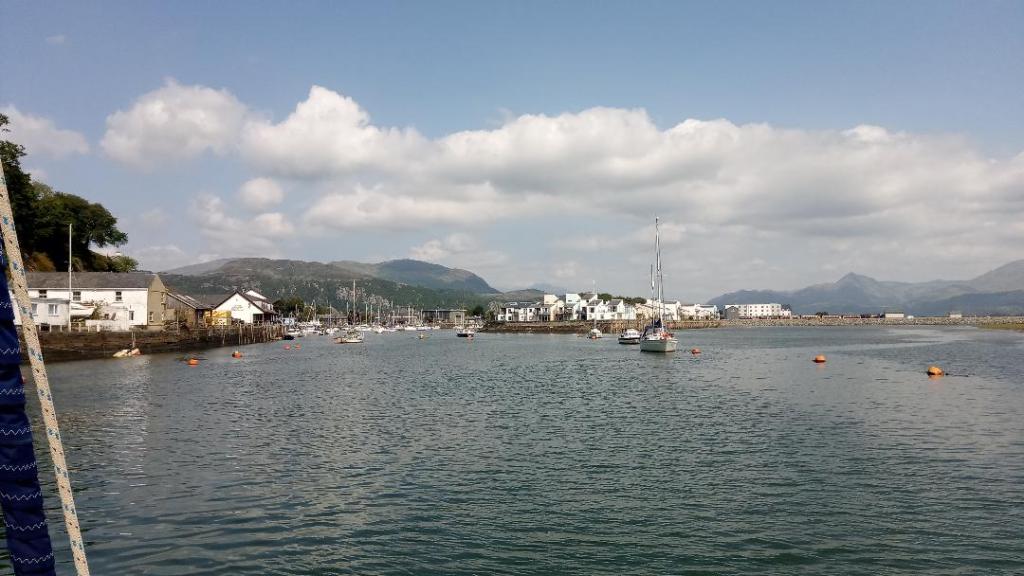
Arriving in Porthmadog
 The Adventures of Sea Orchid